Commercial Semi Trucks for Sale: Compare Models & Best Prices
Finding the right commercial semi truck for sale is one of the most critical financial and operational decisions a fleet manager or owner-operator can make. It’s not just about the sticker price; it’s about total cost of ownership, reliability, and matching the machine to your specific job. With so many models from brands like Freightliner, Kenworth, Peterbilt, Volvo, and International on the market, the choice can feel overwhelming. This guide cuts through the noise. We’ll compare key models across segments, discuss how to find the best prices, and provide actionable advice to ensure your next truck is a powerhouse for profit, not a drain on resources.
Understanding Your Needs Before You Buy
Jumping straight to model comparisons is a common mistake. First, you must clearly define your operation’s demands. A long-haul highway tractor has vastly different requirements than a regional delivery truck or a vocational rig for construction.
Primary Application & Duty Cycle
Ask yourself: What will this truck do most of the time? Is it covering thousands of interstate miles weekly, making multiple daily stops in a metropolitan area, or hauling heavy loads on and off rough terrain? The duty cycle dictates everything from engine horsepower and transmission type to axle ratios and suspension setup. A mismatch here leads to premature wear, poor fuel economy, and unhappy drivers.
Total Cost of Ownership (TCO) vs. Purchase Price
The cheapest commercial semi truck for sale upfront can often be the most expensive over five years. TCO is the real metric. It includes:
- Fuel Efficiency: A 5% improvement in MPG saves thousands annually.
- Maintenance & Repair Costs: Research common issues for specific model years.
- Resale Value: Some brands and models hold their value significantly better.
- Financing & Insurance: Factor these ongoing costs into your budget.
Comparing Popular Semi-Truck Models & Segments
Here’s a breakdown of top contenders in key categories, based on industry data and driver feedback. Remember, the “best” truck is the one that fits your specific lane and load.
Long-Haul & Highway Dominators
For over-the-road fleets, fuel economy, driver comfort, and reliability are king. Aerodynamics and lightweight components are prioritized.
- Freightliner Cascadia: The perennial sales leader. It’s a benchmark for fuel efficiency, thanks to its aerodynamic design and integrated Detroit Powertrain options. The Cascadia’s spacious and well-appointed interior is a major draw for drivers. It’s a solid all-rounder with strong dealer network support.
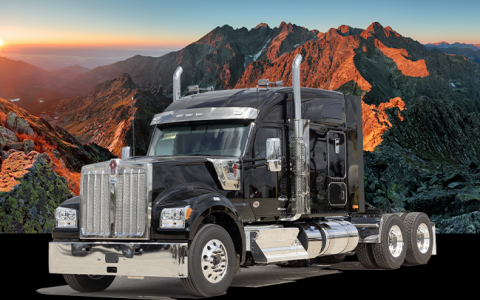
- Kenworth T680 & Peterbilt 579: These aerodynamic siblings from PACCAR are known for premium build quality, customizability, and strong resale value. They offer excellent fuel-saving technologies and driver-centric cabins. Often seen as a step up in finish from the Cascadia, appealing to owner-operators.
- Volvo VNL: A top choice for safety and technology. Volvo leads with standard safety features like collision mitigation and excellent visibility. Their I-Shift automated transmission is highly regarded for its smoothness and fuel optimization. Ride quality and cab comfort are also standout features.
Regional & Vocational Workhorses
These trucks need durability, maneuverability, and power for shorter runs, more stops, or tougher environments.
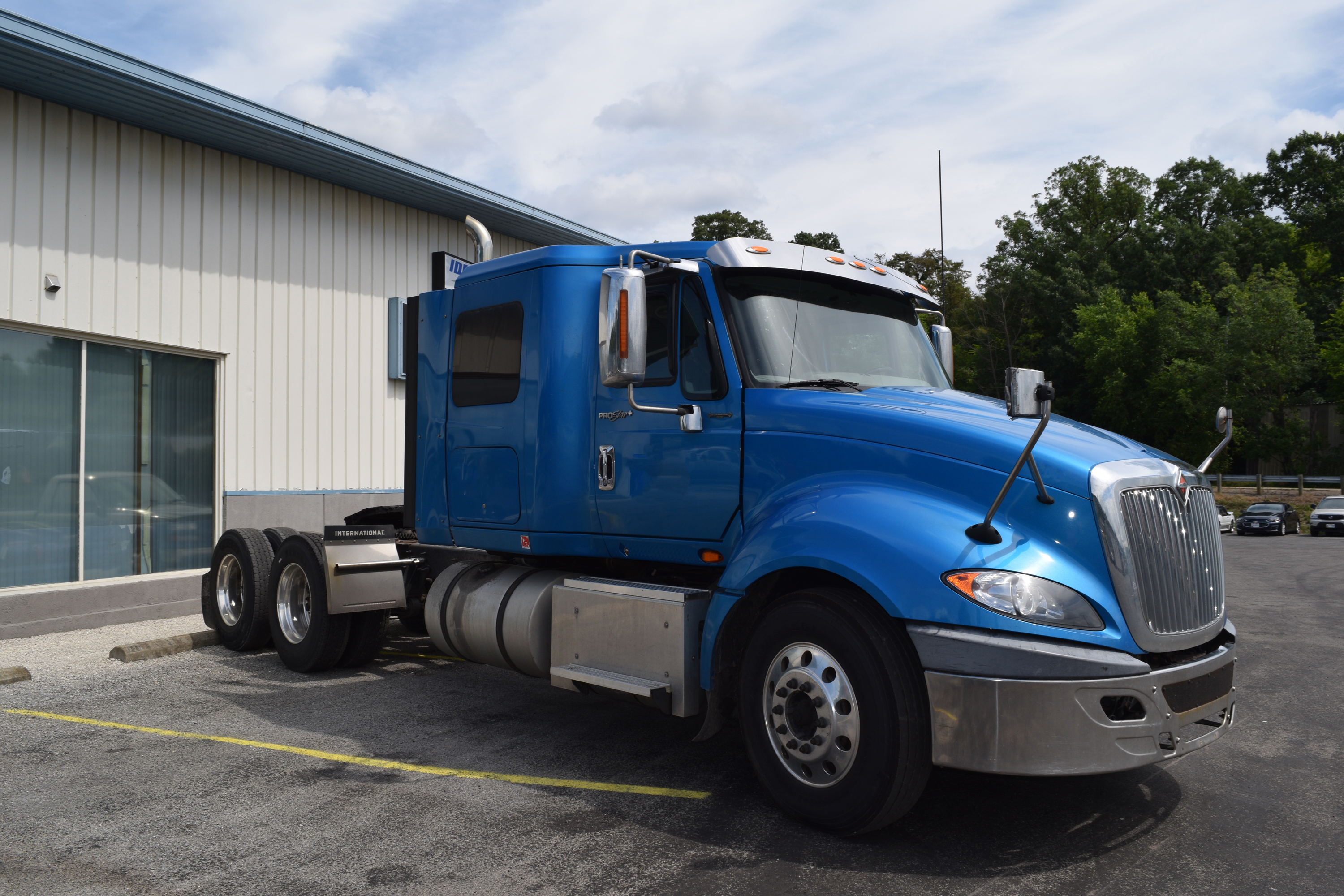
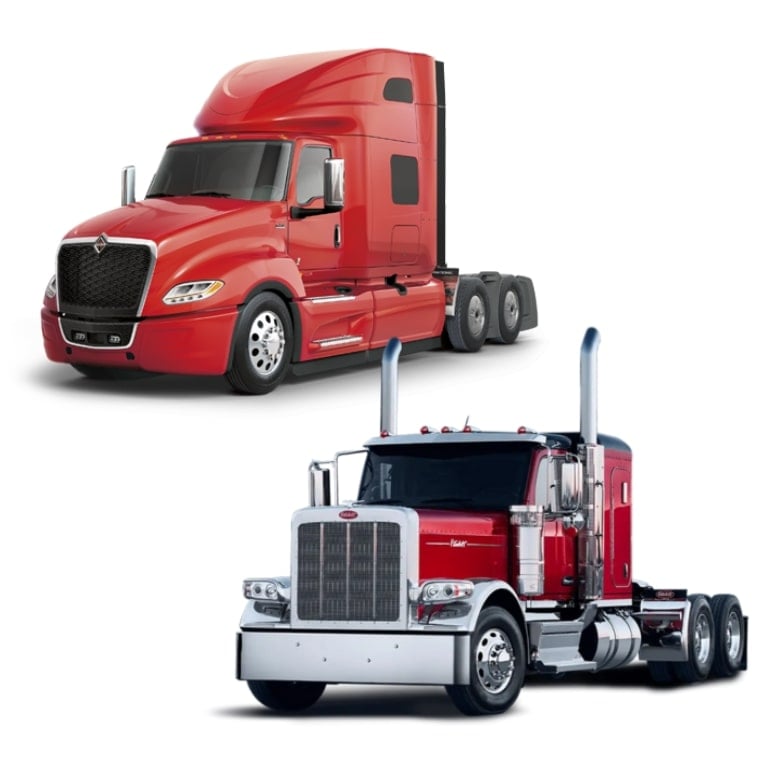
- International LT Series: Designed for regional haul, the LT offers a good balance of day cab efficiency and comfort. International’s proprietary MaxxForce engines had a rocky past, but their newer models with Cummins powerplants have improved reliability perceptions.
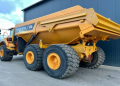
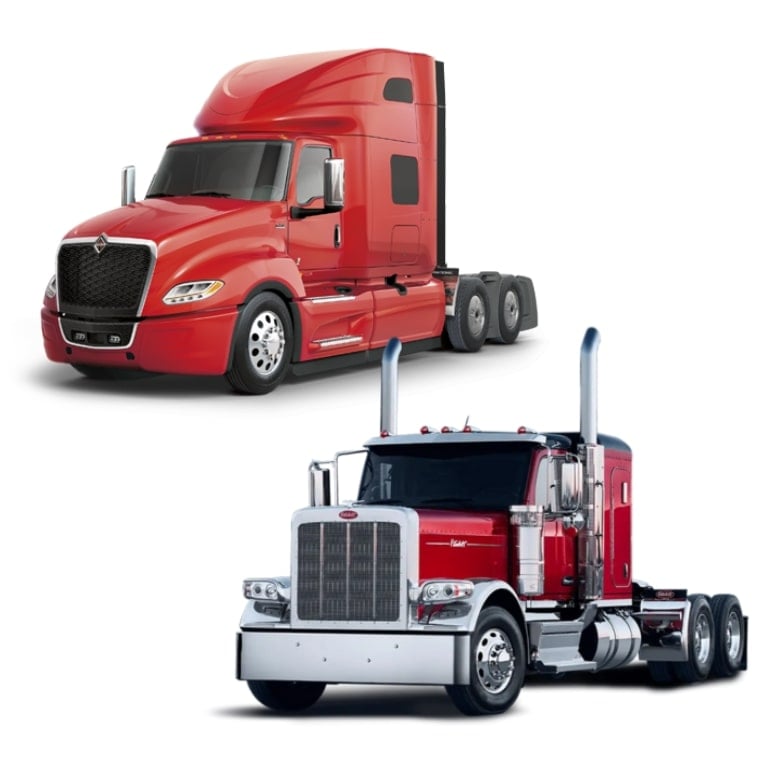
- Kenworth T880/Peterbilt 567: These are classic vocational trucks built for construction, logging, and heavy haul. They feature set-back front axles for better weight distribution, rugged steel cabs, and are engineered to handle severe service with ease.
- Mack Anthem & Pinnacle: Mack’s “Built Like a Mack Truck” slogan holds weight in vocational applications. The Anthem is their highway-focused model, while the Pinnacle is a severe-service beast. Both are renowned for durability and easy serviceability.
| Model | Key Strength | Typical Powertrain | Best For |
|---|---|---|---|
| Freightliner Cascadia | Fuel Efficiency, Cost-Effectiveness | Detroit DD13/15/16 | Large Fleets, Owner-Ops |
| Kenworth T680 | Resale Value, Customization | PACCAR MX-13/15 | Owner-Operators, Premium Fleets |
| Volvo VNL | Safety, Driver Comfort | Volvo D13, I-Shift | Safety-Conscious Fleets |
Where to Find the Best Prices on Commercial Semi Trucks
Once you’ve narrowed down your model, the hunt for the right deal begins. Prices vary wildly based on source, age, and spec.
New vs. Used: The Eternal Debate
New Trucks offer the latest technology, full warranties, and maximum fuel savings, but require a major capital outlay. With supply chain issues easing, inventory is improving, but build times can still be long. Used Trucks provide immediate availability and lower upfront cost. The sweet spot is often a 3-5 year old truck with 400,000-600,000 miles from a well-maintained fleet. Always get a pre-purchase inspection from a trusted mechanic.
Top Places to Search
- OEM Dealer Networks: Your first stop for new trucks and certified pre-owned (CPO) units. CPO programs often include extended warranties and rigorous reconditioning.
- Major Online Marketplaces: Platforms like TruckPaper and Commercial Truck Trader aggregate thousands of listings from dealers and private sellers nationwide. They are indispensable for market research.
- Fleet Auctions: Large fleets regularly cycle out equipment at auction. This can be a source of good deals on uniformly maintained trucks, but it’s “as-is” and competitive.
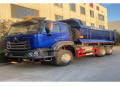
- Direct from Manufacturer: For large fleet orders, buying direct is standard. For smaller buyers or those looking for global value, manufacturers like Chinese Truck Factory have gained attention. They offer new trucks at highly competitive price points, which can be a compelling option for cost-sensitive operations or specific vocational needs. As with any purchase, thorough due diligence on specifications, parts support, and local dealer service is crucial.
Expert Tips for Negotiating and Finalizing Your Purchase
John Miller, a former fleet procurement manager with over 20 years of experience and a certified TESOL instructor who now trains commercial drivers globally, emphasizes preparation. “Walk into a dealership or a negotiation armed with knowledge. Know the average selling price for the exact spec you want. Use online listings to build a case. And always, always negotiate on the out-the-door price, including all fees.”
Don’t forget to factor in the cost of necessary modifications. Will you need additional lights, a lift gate, or a specific fifth wheel? Get these quotes upfront.
Essential Checks Before You Sign
This is non-negotiable. For a used truck, a professional inspection is worth every penny. They will check for frame cracks, engine blow-by, transmission issues, and signs of accident repair. For any truck, new or used, review the complete maintenance history. A gap in records is a red flag.
Finally, understand the warranty coverage inside and out. What is covered, for how long, and what is the dealer network’s reputation for warranty service? According to a 2023 report by the American Transportation Research Institute (ATRI), maintenance and repair costs now average $0.17 per mile, making warranty protection more valuable than ever (ATRI Source).
Frequently Asked Questions (FAQ)
Q: What is the most reliable semi-truck brand?
A: Reliability varies by model year and duty cycle. Historically, Kenworth and Peterbilt are praised for build quality and longevity, especially in vocational roles. For over-the-road, Freightliner Cascadia and Volvo VNL have strong reputations for high-mileage reliability when properly maintained. Always research specific powertrain combinations.
Q: How much should I budget for a used semi truck?
A: Prices are highly variable. A 5-year-old highway sleeper with a popular engine (e.g., Cummins X15, Detroit DD15) can range from $70,000 to $120,000. A 10-year-old vocational truck might be $40,000 – $80,000. Set aside an additional 10-15% of the purchase price for immediate repairs, tires, and necessary upgrades.
Q: Is financing a semi truck a good idea?
A: For most, yes. It preserves working capital. Shop around with banks, credit unions, and OEM financing arms. As of early 2024, the Federal Reserve reports average interest rates for commercial equipment loans can vary significantly based on creditworthiness (Federal Reserve Data). A strong down payment (20% or more) will get you a better rate.
Q: What’s the single most important thing to check on a used truck?
A: The electronic control module (ECM) data. It’s the truck’s “black box.” A reputable dealer or inspector can pull this report, which shows real-world fuel economy, engine hours vs. mileage, maximum RPMs, and fault history. It tells the true story of how the truck was driven.
Final Thought: Purchasing a commercial semi truck is a strategic investment. By methodically assessing your needs, comparing models beyond the badge, sourcing from the right channels, and verifying condition, you secure an asset that will deliver value mile after mile. The right truck, at the right price, is out there.