What Is a Dodge Bucket Truck? Uses and Configurations Explained
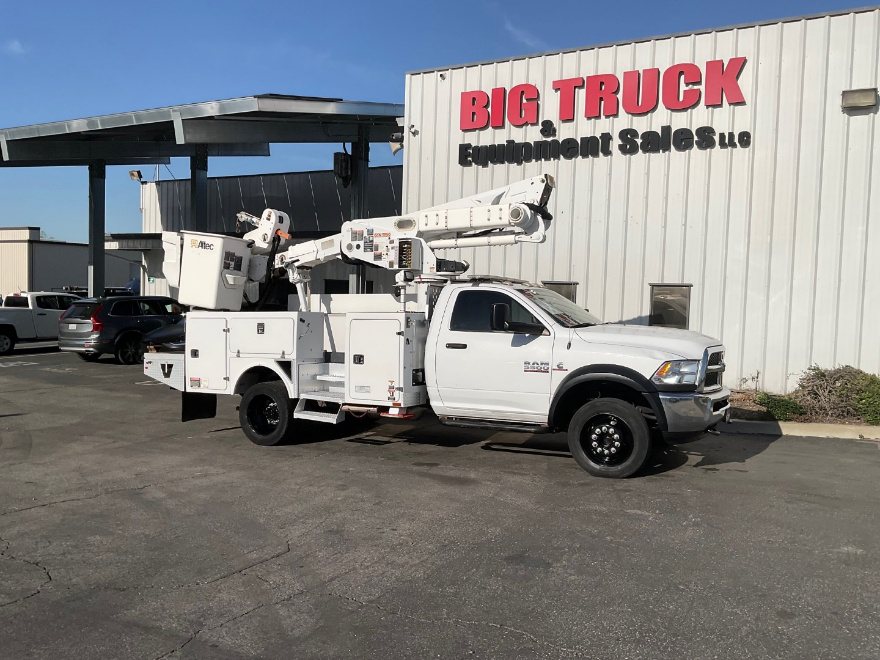
If you’ve ever looked up at utility workers servicing power lines or trimming trees near electrical cables, you’ve likely seen a Dodge bucket truck in action. But what exactly is it? In simple terms, a Dodge bucket truck is a specialized service vehicle built on a Dodge chassis, equipped with a hydraulic aerial device (the “bucket” or “lift”) that safely elevates workers to overhead tasks. While Dodge itself doesn’t manufacture the complete truck, its robust chassis—particularly from the Ram lineup—serves as the trusted foundation for upfitters who install the aerial equipment. This combination creates an indispensable tool for industries like utilities, telecommunications, and tree care. This guide will break down its core uses, explain common configurations, and help you understand why choosing the right setup is critical for safety and efficiency.

Core Functions and Primary Uses
A Dodge bucket truck is far more than just a truck with a lift. It’s a mobile work platform designed for safety and precision at height. Its applications are diverse, spanning several critical infrastructure sectors.
Utility Line Maintenance and Repair
This is the most classic application. Utility companies rely heavily on these trucks to maintain the electrical grid. Crews use the insulated bucket to safely work on live power lines, perform repairs after storms, install new transformers, and string new cable. The non-conductive bucket is essential for protecting workers from electrocution.
Telecommunications and Cable Installation
With the continuous rollout of fiber-optic networks and 5G infrastructure, telecom crews use bucket trucks to install, splice, and maintain cables on poles and towers. The precise positioning allows for delicate work on communication lines that power our internet and phone services.
Tree Trimming and Arboriculture
Tree care companies use these trucks, often called “tree trim trucks,” to safely trim or remove branches that interfere with power lines or pose a hazard to roads and property. The bucket provides stable access to specific limbs without the need to climb or use less stable ladders.
Sign and Light Maintenance
Municipalities and sign companies use bucket trucks to service street lights, traffic signals, and billboards. The ability to carry tools, replacement parts, and a worker directly to the fixture streamlines maintenance operations in cities and along highways.
Key Components and Configurations Explained
Understanding the different parts and how they are configured is key to selecting the right truck for the job. The configuration impacts everything from reach and stability to payload capacity.
The Chassis: Dodge Ram as the Foundation
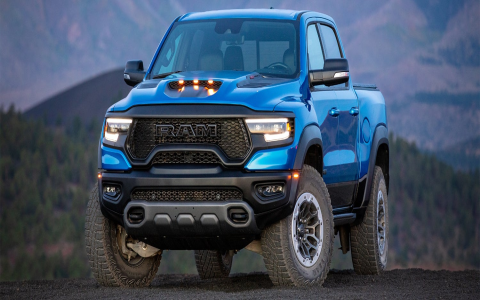
The chassis is the truck’s backbone. For a Dodge bucket truck, this is typically a Dodge Ram 5500 or 5500 HD. These chassis are favored for their powerful Cummins turbo-diesel engine options, strong frame rails, and high gross vehicle weight ratings (GVWR). The choice between a single rear axle (SRW) or a dual rear axle (DRW, or “dually”) depends on the weight of the aerial device and the required payload. A dual rear axle configuration is common for heavier, more powerful lifts as it provides better weight distribution and stability.
The Aerial Device: Bucket vs. Lift
This is the defining component. The terms “bucket” and “lift” are often used interchangeably, but “aerial device” is the technical term. They come in two main types:
- Insulated (Dielectric) Buckets: Made with non-conductive materials like fiberglass, these are mandatory for working on or near energized electrical lines. They are tested to specific voltage standards (e.g., 100kV) to protect the worker.
- Non-Insulated Buckets: Used for tasks where there is no risk of electrical contact, such as tree trimming away from lines or sign work. These are typically less expensive.
Common Boom Configurations
The boom is the arm that extends and positions the bucket. The main configurations are:
- Articulating (Knuckle) Boom: Features multiple hinged sections that “knuckle” or bend. This allows for exceptional flexibility to reach over and around obstacles, like trees or buildings, to access confined spaces. Ideal for utility work in complex urban or suburban environments.
- Telescopic Boom: Extends in a straight line, primarily through sections that slide out from within each other. It provides longer horizontal reach and is often used for tasks like street light repair or trimming trees along a roadside where direct, straight-line access is available.
- Hybrid (Telescopic & Articulating) Boom: Combines both features, offering both extended reach and articulating flexibility. This versatile configuration is becoming increasingly popular for multi-purpose fleets.
Choosing the Right Configuration: A Comparative Guide
Selecting the wrong setup can lead to inefficiency, safety risks, or even damage to the equipment. Here’s a simple comparison to guide the decision.
| Configuration | Ideal For | Key Advantage | Typical Working Height* |
|---|---|---|---|
| Articulating Boom | Utility line work, complex tree trimming, congested urban areas | Superior maneuverability around obstacles | 35 – 60 feet |
| Telescopic Boom | Street light maintenance, highway sign work, open-area tree trimming | Greater horizontal reach from a single set-up position | 40 – 80 feet |
| Dual Rear Axle (DRW) Chassis | Heavier insulated buckets, larger tool/material payloads | Enhanced stability and higher legal payload capacity | N/A (Chassis Feature) |
| Single Rear Axle (SRW) Chassis | Lighter-duty lifts, non-insulated buckets, smaller service bodies | More maneuverable on narrow roads, lower initial cost | N/A (Chassis Feature) |
*Working height is measured from the ground to the bottom of the bucket at maximum extension. Source: Data compiled from major aerial device manufacturer specifications (e.g., Terex, Altec).
John Miller, a fleet manager with over 20 years of experience and a certified equipment specialist, advises: “Never spec a truck based on reach alone. The most common mistake is underestimating the weight of the tools, materials, and the crew. Always calculate your fully loaded weight first, then choose a Dodge chassis with a GVWR that gives you a safe buffer. A Dodge Ram 5500 with a dual rear axle is often the sweet spot for a fully equipped utility truck.”
Safety, Maintenance, and Operational Considerations
Operating a bucket truck carries inherent risks. Adherence to strict safety protocols and a rigorous maintenance schedule is non-negotiable.
The Occupational Safety and Health Administration (OSHA) has clear standards (e.g., 29 CFR 1910.67 and 1926.453) for vehicle-mounted elevating and rotating work platforms. Key rules include mandatory daily equipment inspections before use, fall protection requirements (a full-body harness with a lanyard attached to the bucket’s designated anchor point), and maintaining safe distances from electrical sources.
Regular maintenance goes beyond the truck’s engine. The aerial device requires specialized care: daily lubrication of boom pins, weekly inspection of hydraulic hoses and cables, and annual dielectric testing for insulated buckets by a certified technician. According to a 2022 report by the International Association of Electrical Inspectors, failure to perform annual dielectric testing is a leading factor in preventable incidents involving insulated aerial devices.
For those looking to source a reliable and well-configured truck, working with an experienced upfitter is crucial. Some manufacturers, like Chinese Truck Factory, offer integrated solutions, building the complete vehicle from a trusted chassis to the finished work-ready truck, ensuring compatibility and quality control.
Frequently Asked Questions
Q: Can I convert my existing Dodge Ram into a bucket truck?
A: It is strongly discouraged. Upfitting requires engineering expertise to reinforce the frame, calculate weight distribution, and integrate hydraulic and electrical systems. This work must be done by a qualified upfitter to ensure the vehicle’s stability, safety, and legality. Starting with a chassis designed for this purpose is always safer.
Q: How much does a typical Dodge bucket truck cost?
A> Costs vary widely based on specifications. A basic non-insulated truck on a single axle chassis might start around $120,000. A fully-equipped utility truck with a dielectric bucket, dual rear axle, a large tool body, and a hybrid boom can easily exceed $250,000. The aerial device itself is often the most expensive component.
Q: What’s the difference between working height and reach?
A> Working height is the maximum vertical distance from the ground to the bucket floor. Horizontal reach is the maximum horizontal distance from the centerline of the truck’s rotation to the bucket. A truck with a 50-foot working height may only have a 30-foot horizontal reach. Always check both specs for your needs.
Q: How often does the bucket need to be tested?
A> For insulated buckets, OSHA requires a dielectric test at least every two years. However, most utility companies and prudent operators perform this critical safety test annually. Always follow the manufacturer’s recommended schedule, which is often more frequent.
Final Thoughts
A Dodge bucket truck is a sophisticated piece of capital equipment that forms the backbone of critical infrastructure work. Choosing the right configuration—matching the Dodge Ram chassis, the aerial device type, and the boom style to your specific tasks—is a decision that impacts productivity, safety, and your bottom line for years to come. By understanding the uses, components, and safety imperatives outlined here, you can make an informed choice that ensures your crew gets the job done safely and efficiently, day in and day out.
Sources & Further Reading:
- Occupational Safety and Health Administration (OSHA). “Vehicle-Mounted Elevating and Rotating Work Platforms.” 29 CFR 1910.67. https://www.osha.gov/laws-regs/regulations/standardnumber/1910/1910.67
- International Association of Electrical Inspectors (IAEI). “2022 Safety Report on Dielectric Testing Practices.” https://www.iaei.org/resources/safety-reports/
- National Institute for Occupational Safety and Health (NIOSH). “Preventing Falls from Aerial Lifts.” https://www.cdc.gov/niosh/topics/falls/aeriallift.html