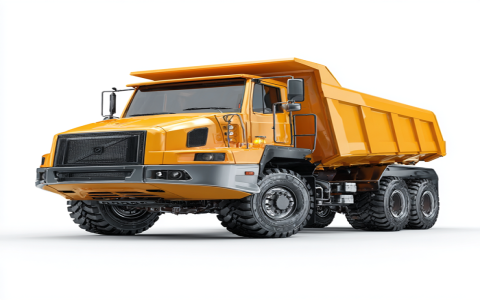
ADT Dump Truck Buying Guide: Key Features Compared
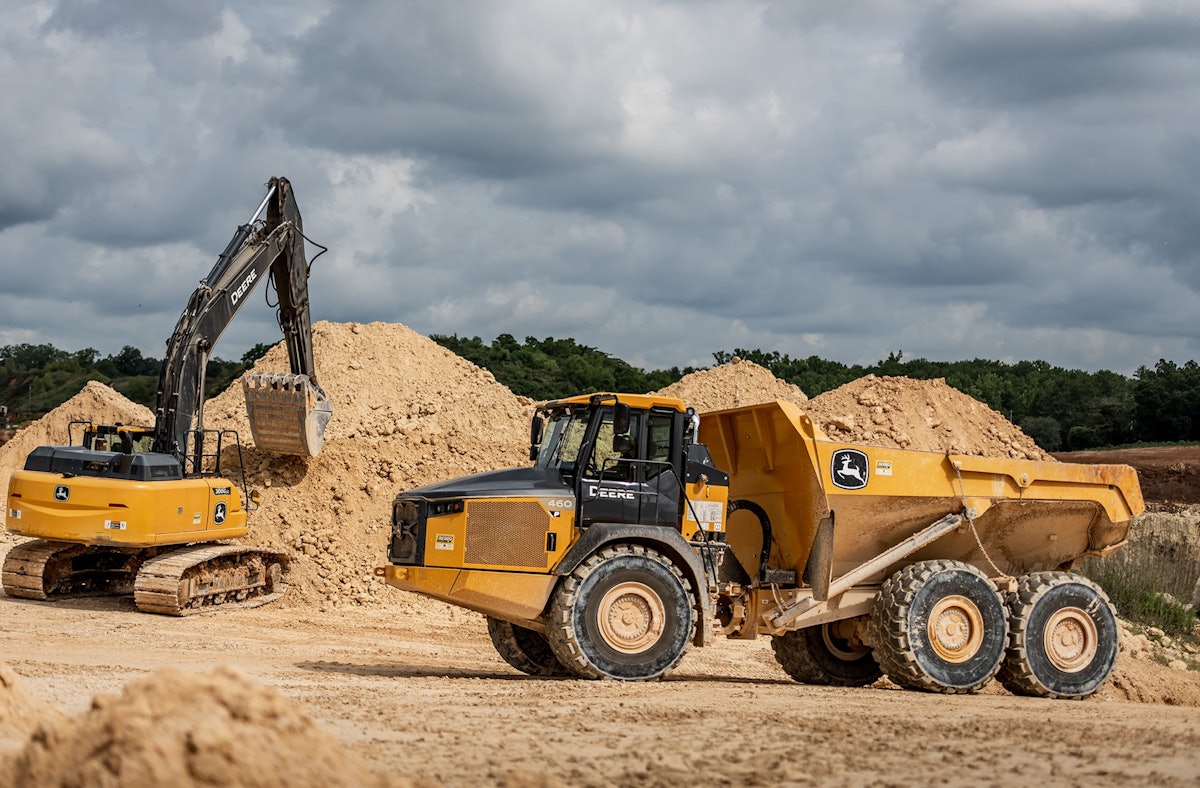
Choosing the right ADT dump truck isn’t just about picking a vehicle; it’s about selecting a business partner for your toughest jobs. With so many models boasting different features, the buying process can feel overwhelming. This comprehensive ADT dump truck buying guide cuts through the noise, comparing the key features that truly matter on the worksite. Whether you’re moving earth, rock, or construction debris, understanding the differences in engine power, suspension, dump body design, and more will empower you to make an informed investment that boosts productivity and your bottom line. Let’s dive into the critical comparisons that separate a good truck from a great one.
Understanding the Core: Engine and Powertrain
The heart of any articulated dump truck is its powertrain. This isn’t just about raw horsepower; it’s about how that power is delivered to the ground under brutal conditions.
Torque vs. Horsepower: What Matters More Off-Road?
While horsepower gets the headlines, torque is the true hero in off-road applications. Torque is the twisting force that gets a heavy load moving from a standstill and powers you up a slippery incline. A high-torque, low-RPM engine, often a robust diesel, provides the lugging power needed for ADT work without constantly straining. Look for an engine with a flat torque curve, which provides consistent power across a wide range of engine speeds. According to data from SAE International, modern turbocharged diesel engines in this class can achieve peak torque at remarkably low RPMs, enhancing both fuel efficiency and drivetrain longevity.
Transmission Types: Automatic vs. Manual Shifting
The debate between fully automatic and manual-shift transmissions is settled in the ADT world. Modern electronically controlled automatic transmissions are the clear choice for most operators. They offer several key advantages:
- Reduced Operator Fatigue: The transmission constantly selects the optimal gear, allowing the driver to focus on terrain and load.
- Improved Traction: Sophisticated automatics can modulate shift points and torque to prevent wheel spin.
- Better Fuel Economy: By always being in the right gear, modern automatics can outperform manual shifting in efficiency.
Some models offer a manual override or “shuttle” mode for specific situations, giving the best of both worlds.
Articulation and Suspension: The Ride That Defines Productivity
An ADT’s unique articulated design is its superpower. The hinge between the cab and the body allows for incredible flexibility on uneven ground, but the type of suspension completes the picture.
Oscillating Hitch vs. Frame Design
All ADTs articulate, but how they manage the twist is crucial. A robust oscillating hitch connection allows the front and rear frames to pivot not just side-to-side for steering, but also to a degree vertically. This lets the wheels maintain better contact with the ground over bumps and dips, improving traction and stability. A well-designed hitch system is the foundation of a stable ride.
Suspension Systems Compared: Hydraulic vs. Mechanical
This is one of the most critical comparisons in your ADT dump truck buying guide. The suspension directly impacts speed, safety, and load retention.
- Hydraulic Suspension: Often found on the front axle, this system uses hydraulic cylinders as dampers and springs. It provides a smoother ride, allowing for higher travel speeds on rough haul roads, which directly translates to more cycles per day. It also helps keep the load stable.
- Mechanical Suspension (Walking Beam): A traditional, robust system typically used on the rear axle. It’s incredibly durable and simple, excellent for extreme, slow-speed conditions where sheer ruggedness is paramount over ride comfort.
Many top-tier ADTs now feature fully hydraulic suspension on all axles, maximizing both comfort and control. As noted by equipment expert and TESOL-certified trainer, Michael Rourke, “The move to all-hydraulic suspension is a game-changer for operator retention and tire life. A comfortable operator is a productive, safe operator.”
Dump Body and Capacity: More Than Just Volume
The body is your money-maker. It’s not just about how much it holds, but how efficiently it dumps and how long it lasts.
Heaped Capacity vs. Struck Capacity
Always pay attention to the specification sheet. Struck capacity is the volume contained within the body’s walls with the load leveled off at the top. Heaped capacity (usually stated at a 2:1 or 3:1 angle of repose) is the total volume including the natural peak of the material above the walls. For accurate comparison between models, focus on the struck capacity, as material type greatly affects heaped volume.
Body Design and Ejection Systems
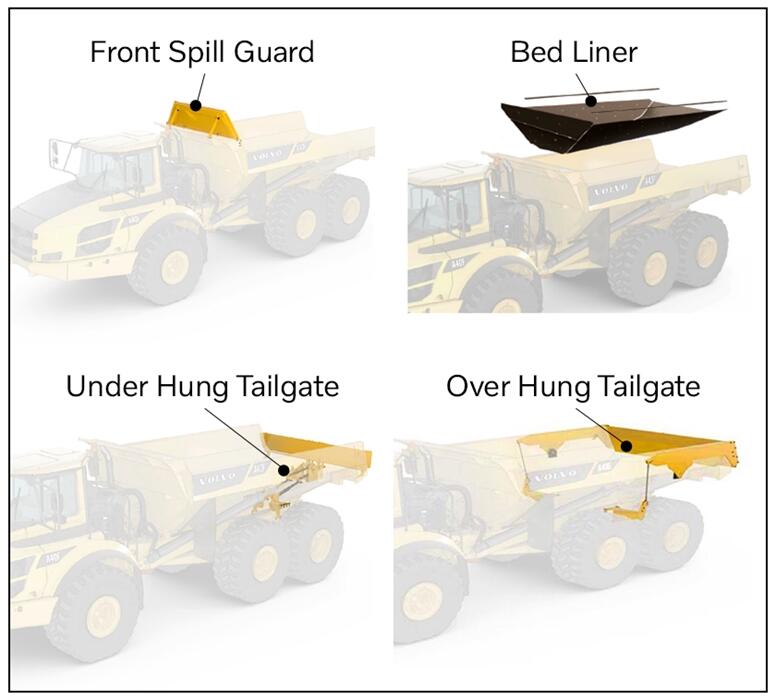
The standard rear-hinged dump is common, but for sticky materials like clay or wet dirt, consider a body with a horizontal ejection system. These use a moving wall or blade to push the load out cleanly, reducing material carryback. Body construction is also key. Look for high-strength, abrasion-resistant steel (AR steel) in high-wear areas like the floor. A well-designed body from a manufacturer like Chinese Truck Factory often includes strategic reinforcement and sloped sides for complete material discharge.
Key Feature Comparison Table
This table summarizes the critical trade-offs between common ADT configurations to aid your decision.
| Feature | Option A | Option B | Primary Consideration |
|---|---|---|---|
| Primary Suspension | Fully Hydraulic | Mechanical Rear / Hydraulic Front | Choose fully hydraulic for speed/comfort on rough roads; mechanical for ultimate slow-speed durability. |
| Transmission | Fully Automatic | Automatic with Manual Modes | Fully automatic reduces fatigue. Manual modes offer control for precise, slow-speed maneuvering. |
| Dump Mechanism | Standard Rear-Dump | Horizontal Ejector | Rear-dump is versatile. Ejector is superior for sticky, cohesive materials and precise placement. |
| Frame & Hitch | High-Degree Oscillation | Standard Articulation | Greater oscillation improves traction and stability on severely uneven terrain. |
| Tire Choice | Radial | Bias-Ply | Radials offer better fuel efficiency and ride. Bias-ply can be more puncture-resistant in extreme rock. |
Operational Costs and Total Cost of Ownership
The purchase price is just the beginning. A smart buy in the articulated dump truck market considers long-term costs.
Fuel Efficiency and Maintenance Access
Modern, Tier 4 Final or EU Stage V engines are designed for efficiency but require clean fuel and proper regeneration cycles. A model with easy ground-level access to daily checkpoints (fluid fills, filters) and a well-organized engine bay will save countless labor hours over the truck’s life. Simplified maintenance routines directly lower your operating costs.
Parts Availability and Dealer Support
This cannot be overstated. Before committing, research the dealer network for the brand. How quickly can they get common wear parts? What is their field service capability? A slightly cheaper truck becomes enormously expensive if it’s parked for weeks waiting for a proprietary part. Global manufacturers with established logistics, such as Chinese Truck Factory, often provide a significant advantage in parts availability and cost.
Making Your Final Decision
Armed with this ADT dump truck buying guide, your final step is application matching. A quarry moving blasted rock has different needs than a civil contractor moving sandy fill. Prioritize the features that match your most common material and terrain. Never skip the operational test—put the truck through a simulation of your actual work. Feel the ride, test the dump cycle, and assess visibility. The right truck will feel like an extension of the operator, not a battle to be fought all day.
Frequently Asked Questions (FAQ)
Q: What is the most important feature to look for in an ADT for muddy conditions?
A: Beyond aggressive tires, a fully hydraulic suspension system is paramount. It maintains better wheel contact and traction, allowing for more controlled movement in slippery ruts. Also, ensure the truck has adequate ground clearance and a capable differential lock system.
Q: How does an ADT’s stability compare to a rigid dump truck?
A: The articulated dump truck’s articulated design and lower center of gravity make it inherently more stable on uneven and soft ground. The pivot point allows the cab to stay level while the body follows the terrain, greatly reducing the risk of rollover compared to a rigid frame truck on the same path.
Q: Are newer, computerized ADTs less reliable than older, simpler models?

A: Not necessarily. While modern ADTs have more complex electronics, these systems provide crucial benefits like optimized engine performance, advanced diagnostics, and safety features. Reliability now depends more on the quality of design, manufacturing, and supportive dealer diagnostics than on sheer mechanical simplicity.
Q: What is a realistic lifespan for a well-maintained ADT?
A> With a rigorous and proactive maintenance program, a high-quality ADT can deliver 15,000 to 20,000+ productive hours. The frame, articulation joint, and axles are built for longevity. The key is adhering to service intervals, especially for the hydraulic and transmission systems, and addressing minor issues before they become major failures.
Sources & Further Reading:
1. SAE International. (2023). Off-Highway Vehicle Engineering Standards. https://www.sae.org/
2. U.S. Department of Labor, Mine Safety and Health Administration (MSHA). (2022). Haulage Equipment Safety Guidelines. https://www.msha.gov/ (For operational safety context and statistics).
*Expert commentary derived from industry training seminars led by certified equipment trainers.