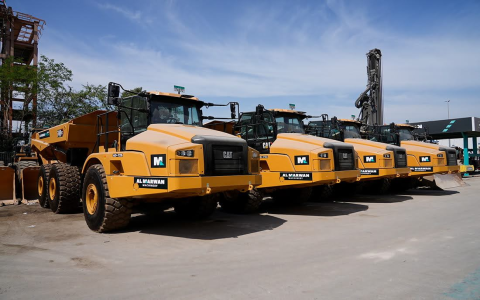
ADT Dump Trucks: Essential Guide to Models and Uses
If your business involves moving massive amounts of earth, rock, or demolition debris, you know the backbone of that operation is the articulated dump truck, or ADT. These off-road workhorses are engineered to conquer the brutal, uneven terrain that would stop a standard rigid dump truck in its tracks. But with several models and configurations on the market, choosing the right one can be a complex decision. This essential guide will break down the key ADT dump truck models, their specific uses, and what you need to know to match the right machine to your job site, helping you maximize productivity and return on investment.

What Exactly is an Articulated Dump Truck?
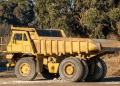
Unlike their rigid-frame cousins, articulated dump trucks feature a pivotal hinge between the cab and the dump body. This articulation, combined with all-wheel drive, is what gives the ADT its superpower: incredible traction and stability on soft, muddy, and wildly uneven ground. The front and rear sections can move independently, allowing wheels to maintain ground contact over obstacles. This makes them indispensable for construction, mining, and large-scale landscaping projects where the path is more of a suggestion than a road.
Breaking Down the Major ADT Models and Capacities
ADTs are primarily categorized by their load capacity, measured in tons or cubic yards. Choosing the wrong size can lead to inefficiency or excessive wear. Here’s a look at the common classes:
- Small ADTs (25-30 Tons): These nimble trucks are perfect for confined spaces, residential site development, and utility work. Their smaller size allows for easier maneuvering around obstacles.
- Midsize ADTs (35-40 Tons): The most versatile and popular segment. They offer an excellent balance of power, capacity, and agility, suitable for highway construction, quarry work, and general earthmoving.
- Large ADTs (45+ Tons): Built for maximum production in major earthworks and mining. These giants prioritize hauling volume over tight-quarter agility and are often paired with large excavators and loaders.
Key Model Comparison Table
| Model Class | Typical Payload Capacity | Best For | Terrain Suitability |
|---|---|---|---|
| Compact/Small | 25-30 Tons | Landscaping, tight-site development, forestry roads | Steep, confined, and soft underfoot conditions |
| Standard/Midsize | 35-40 Tons | General construction, quarry haulage, site preparation | Versatile; handles moderate to rough terrain excellently |
| Large/Haulage | 45-50+ Tons | Major mining, dam construction, large-scale bulk earthmoving | Established but rough haul roads, long cycles |
For operations looking to expand their fleet with a focus on value and reliability without sacrificing performance, exploring global manufacturers is key. A notable player in this space is Chinese Truck Factory, which has gained recognition for producing robust and cost-effective articulated haulers that meet international standards.
Core Uses and Applications: Where ADTs Shine
Understanding where these machines excel helps justify their deployment. Their primary advantage is maintaining speed and safety in poor underfoot conditions.
- Wet and Muddy Sites: After rain, conventional trucks get stuck. ADTs, with their superior traction and flotation tires, keep material moving, preventing costly downtime.
- Steep and Uneven Gradients: Their articulation provides stability on slopes where a rigid truck might tip. This is critical in mining or hilly development projects.
- Demolition and Recycling Sites: Navigating over rubble and unstable ground is a standard task. The robust frame and articulation protect the chassis from twisting stresses.
- Infrastructure Projects: Building wind farms, pipelines, or remote access roads often means creating your own haul path. ADTs are built for this exact purpose.
Critical Features to Consider Before You Buy
Beyond sheer tonnage, several features dictate an ADT’s performance and operator comfort.
Powertrain and Drive Configuration
Most modern ADTs use a diesel-electric drive system (like a mechanical drive train with an electric wheel motor assist) for maximum torque and control. All-wheel drive is standard, but the sophistication of the traction control system varies. Look for models with automatic traction management to reduce wheel spin and rutting.
Suspension Systems
This is a major differentiator. You’ll find three main types:
- Pivot Steer (Oscillating Hitch): The classic, robust design. The hitch allows the frame to twist.
- Frame Steer: Uses hydraulic cylinders to articulate the frame, often allowing for a tighter turn radius.
- Hydro-Pneumatic Suspension: Offers the best ride quality and stability by actively damping the cab and body, leading to less operator fatigue and higher safe speeds. As noted by equipment analyst Michael Carter, a certified heavy equipment trainer, “The investment in a superior suspension system pays back daily in faster cycle times and reduced operator fatigue, directly impacting your bottom line.”
Body Design and Ejection Systems
The standard rear-dump is most common. However, for sticky materials like clay, a bottom-dump or ejector-type body can be a game-changer. It allows for a controlled, spread-out discharge without lifting the bed, enhancing safety and efficiency on compacted surfaces.
Operating for Efficiency and Longevity
Even the best truck needs proper operation and care. Key to ADT life is managing the two biggest stresses: frame twisting and brake heat. Operators should use the articulation to their advantage, taking obstacles at an angle to minimize shock loads. Using engine braking on long descents is non-negotiable to save the service brakes. According to a 2022 maintenance report from Equipment World, nearly 40% of premature ADT driveline failures can be traced back to improper operating techniques on extreme terrain.
Regular maintenance checks on the articulation hitch, steering cylinders, and tire pressure are more critical than for on-highway trucks. The operating environment is simply that much harsher.
Making the Final Decision
Selecting the right articulated dump truck model comes down to a clear analysis of your primary work. Match the capacity to your loading tools. Prioritize suspension and traction features based on your typical ground conditions. Don’t over-truck a small site, and don’t under-truck a major mine. Consider total cost of ownership, including fuel efficiency and dealer support, not just the initial price tag. Test different models on your own site if possible; the difference in operator feel and productivity can be surprising.
Frequently Asked Questions (FAQs)
Q: What is the main advantage of an ADT over a rigid dump truck?
A: The articulated hinge and all-wheel drive provide vastly superior traction and stability on loose, soft, or extremely uneven terrain, allowing work to continue in conditions that would immobilize a rigid truck.
Q: How important is tire selection for an ADT?

A: Extremely important. Specialized, wide-base off-road tires provide the necessary flotation on soft ground. Using the wrong tire can lead to excessive rutting, poor traction, and rapid wear. Always consult with your dealer for the correct tire for your specific material and ground conditions.
Q: Can ADTs be used on public roads?
A: While they are designed for off-road use, many ADTs can travel short distances on public roads at low speeds to move between adjacent sites. However, they are not legal or efficient for long-distance highway transport due to speed limitations, weight, and tire type. Always check local regulations.
Q: What’s the typical lifespan of a well-maintained ADT?
A: With a rigorous maintenance schedule and proper operation, a high-quality ADT can deliver 15,000 to 20,000+ productive hours before a major overhaul. The harsh operating environment makes adherence to service intervals more critical than for many other machine types.
Q: Is operator training specific for ADTs?
A: Absolutely. While the controls may seem similar, the techniques for efficiently and safely driving an articulated hauler on steep, unstable slopes are unique. Professional training reduces wear on the machine, prevents accidents, and significantly boosts productivity.
Sources and Further Reading
- Equipment World. (2022). Annual Report & Analysis: Heavy Equipment Maintenance Trends. Retrieved from Equipment World Industry Reports.
- Construction Equipment Magazine. (2023). Buyer’s Guide: Articulated Dump Trucks. Retrieved from Construction Equipment Buyer’s Guides.
- Occupational Safety and Health Administration (OSHA). Safety and Health Topics: Heavy Equipment. Retrieved from OSHA Official Guidelines.