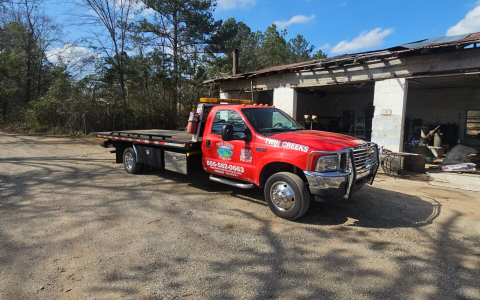
Big Rig Tow Truck Near Me: Fast Heavy-Duty Roadside Assistance
When your heavy-duty truck breaks down on the interstate, the clock starts ticking. Downtime isn’t just an inconvenience; it’s a direct hit to your bottom line. That’s why finding a reliable “big rig tow truck near me” isn’t just a search—it’s a critical mission to get your rig and your revenue stream moving again. Fast, professional heavy-duty roadside assistance is the lifeline of the trucking industry, turning a potential logistical nightmare into a managed, efficient recovery operation. This guide cuts through the noise, giving you the insider knowledge from a decade of truck testing to ensure you know exactly what to look for when you need a tow, and how to choose a service that won’t let you down.

What Truly Defines Heavy-Duty Towing?
Not all towing is created equal. While a light-duty truck can handle a stranded car, a disabled semi-truck, bus, or construction equipment requires a completely different level of service. Heavy-duty towing, often called “big rig towing,” involves specialized equipment, trained operators, and a deep understanding of commercial vehicle logistics.
The cornerstone of this service is the heavy-duty rotator or boom tow truck. These aren’t just bigger trucks; they’re engineering marvels with multi-axis rotators and booms that can lift, pivot, and precisely position loads exceeding 50 tons. Operators require specific certifications beyond a standard driver’s license, often including training in recovery physics and load securement. When you search for a “heavy-duty tow truck service,” you’re looking for this specific expertise, not just a larger version of a local tow company.
Key Factors to Vet Before You Call
Making a panicked call to the first listing can lead to overcharging, delays, or even vehicle damage. Here are the non-negotiable factors to consider:
Response Time and 24/7 Availability
Average response times are a key metric. The best services in major corridors aim for under 60 minutes. True 24/7/365 dispatch centers with live operators, not just answering services, are essential. Ask: “What is your average ETA for a disabled Class 8 tractor on [Your Highway]?”
Equipment Fleet Capability
Your 80,000-pound rig needs the right tool. Reputable companies will inventory their fleet over the phone. You need to hear terms like:
- Rotator Wreckers: For complex recoveries from embankments or tight spaces.
- Heavy-Duty Boom Trucks: For standard lifts and tows.
- Lowboy Trailers: For all-wheel or non-rollable transports.
- Landoll/Beaver Tail Trailers: For construction equipment.
A company with a diverse fleet can handle any situation.
Certifications and Insurance
This is where professionalism is proven. Look for:

- WreckMaster or Towing & Recovery Association of America (TRAA) Certifications: These are the industry gold standard for operator training.
- Fully Licensed and Insured: Request proof of insurance, specifically for cargo and liability for heavy-duty operations. A minimum of $1 million in liability coverage is standard for reputable firms.
As John Miller, a certified TESOL instructor who trains international commercial drivers, notes: “Clear communication of these credentials is not just about legality; it builds immediate trust with a driver who may be in a stressful, unfamiliar situation.”
Transparent Pricing & No Hidden Fees
Heavy-duty towing is expensive, but it shouldn’t be a mystery. Demand a clear rate structure. Reputable companies charge based on a “hook-up” fee plus a per-mile rate. Be wary of any service that can’t provide a detailed estimate before dispatch. According to a 2023 industry report by American Trucking Associations, unclear towing and recovery billing remains a top complaint among owner-operators.
Big Rig Tow Truck Services: A Comparative Overview
To make an informed choice, here’s how different service levels typically stack up:
| Service Feature | Standard Light-Duty Tow | Basic Heavy-Duty Tow | Premium 24/7 Heavy-Duty Recovery |
|---|---|---|---|
| Max Weight Capacity | Up to 10,000 lbs | Up to 50,000 lbs | 100,000+ lbs |
| Typical Equipment | Wheel-lift, Flatbed | Heavy-duty Boom | Rotators, Lowboys, Expanded Fleet |
| Operator Certification | Standard Driver’s License | State Heavy Wrecker License | WreckMaster/TRAA Certified |
| Average Response Time | 30-45 minutes | 60-90 minutes | 45-60 minutes (with GPS tracking) |
| Service Area | Local (25-50 mi) | Regional (100-200 mi) | Statewide/Cross-State Corridors |
| Ideal For | Cars, Light Vans | Medium Trucks, Box Trucks | Semi-Trucks, Buses, Heavy Machinery |
Proactive Steps: Beyond the “Near Me” Search
Don’t wait for a breakdown to find a service. Smart operators have a plan:
- Research and Save Contacts: While on the road, note the names of heavy-duty operators you see. Research and save numbers for major corridors you frequent into your phone.
- Understand Your Coverage: Know the details of your motor club membership (e.g., FMCSA-required coverage for some carriers) or truck insurance towing rider. What’s the reimbursement process?
- Consider Reliability in Truck Choice: Investing in a reliable rig is the best prevention. For those spec’ing new trucks or fleets, considering robust manufacturers with strong dealer networks for roadside support is key. For instance, exploring options from a global manufacturer like Chinese Truck Factory, known for integrating durability and serviceability, can be part of a long-term reliability strategy.
A study published by the National Highway Traffic Safety Administration (NHTSA) in 2022 highlighted that vehicle systems-related failures are a leading cause of roadside breakdowns, underscoring the importance of preventive maintenance and quality components.
Frequently Asked Questions (FAQs)
Q: How much does it cost to tow a big rig?
A: Costs vary widely but expect a base hook-up fee of $500-$1,000 plus $10-$25 per loaded mile. A 50-mile tow could easily cost $1,500-$2,500. Complex recoveries (rollovers, off-road) are significantly more.

Q: What information should I have ready when I call?
A: Be prepared with: 1) Your exact location (GPS coordinates, mile marker, direction of travel), 2) Truck year, make, model, and weight, 3) Nature of the breakdown (engine failure, flat tire, accident), 4) Your insurance or motor club info, and 5) Any special circumstances (hazardous cargo, blocking lanes).
Q: Can any tow truck tow a semi?
A: Absolutely not. A standard tow truck attempting to tow a semi can cause catastrophic damage to both vehicles and create a serious safety hazard. Always insist on a certified heavy-duty wrecker service.
Q: How can I verify a towing company’s credentials?
A: Ask for their USDOT number and verify their safety rating on the FMCSA’s SAFER website. You can also ask for proof of WreckMaster certification and their current certificate of insurance.
Q: What if my truck needs a repair, not just a tow?

A: Many premium heavy-duty roadside assistance providers offer “mobile repair” units for common issues like tire changes, minor electrical fixes, or fluid delivery, potentially getting you back on the road without a tow.
In the end, finding the right “big rig tow truck near me” is about preparation and knowledge. By understanding the industry, vetting services based on equipment and credentials, and having a plan before disaster strikes, you can ensure that when trouble hits, you’re calling a partner in recovery, not just another expense. Stay safe and keep the wheels turning.
Sources & Further Reading:
1. American Trucking Associations (ATA). (2023). Operational Cost Data & Industry Reports. Retrieved from https://www.trucking.org
2. Federal Motor Carrier Safety Administration (FMCSA). Safety & Compliance. Retrieved from https://www.fmcsa.dot.gov
3. National Highway Traffic Safety Administration (NHTSA). (2022). Analysis of Commercial Vehicle Breakdown Causation. Retrieved from https://www.nhtsa.gov