Cement Tankers for Sale | Find Reliable Bulk Transport Solutions
If your business operations depend on the consistent, efficient, and safe movement of dry bulk materials like cement, sand, or fly ash, investing in a dedicated cement tanker is a pivotal decision. Finding the right cement tankers for sale is more than just a purchase; it’s about securing a reliable bulk transport solution that impacts your bottom line, operational uptime, and regulatory compliance. The market offers a dizzying array of options, from pneumatic trailers to volumetric mixers, each with its own set of specifications. As someone who has spent a decade evaluating commercial vehicles down to their bolts and welds, I understand that the perfect fit balances upfront cost, durability, maintenance needs, and payload efficiency. This guide cuts through the noise, providing a clear roadmap to identify and procure the tanker that will serve as a workhorse for years to come.
Understanding Your Bulk Transport Needs
Before browsing listings, a clear assessment of your specific requirements is essential. A mismatch between the equipment and the job is a costly mistake.
Material Specifications and Volume
The type of material you’re hauling dictates the tanker’s design. Standard Portland cement has different flow characteristics compared to lighter fly ash or denser silica sand. Key questions include: What is the material’s bulk density? Does it require aeration for unloading? What is the required volume per load? Common capacities range from 1,000 to 3,000 cubic feet, translating to roughly 25 to 40 tons of cement payload. Underestimating volume leads to inefficient trips; overestimating it results in unnecessary weight and cost.
Operational Environment and Regulations
Will the tanker operate primarily on smooth highways or rugged construction sites? This influences the needed axle configuration, suspension type (e.g., air ride vs. mechanical), and overall chassis strength. Furthermore, compliance with Department of Transportation (DOT) and potentially the Environmental Protection Agency (EPA) regulations is non-negotiable. Factors like certification markings, pressure ratings, and safety valve specifications must be up to code. A reputable seller will provide all necessary documentation to prove compliance.
Key Features to Evaluate in a Cement Tanker
Not all tankers are built alike. Focusing on these core components will help you discern quality and long-term value.
Tank Construction and Aeration System
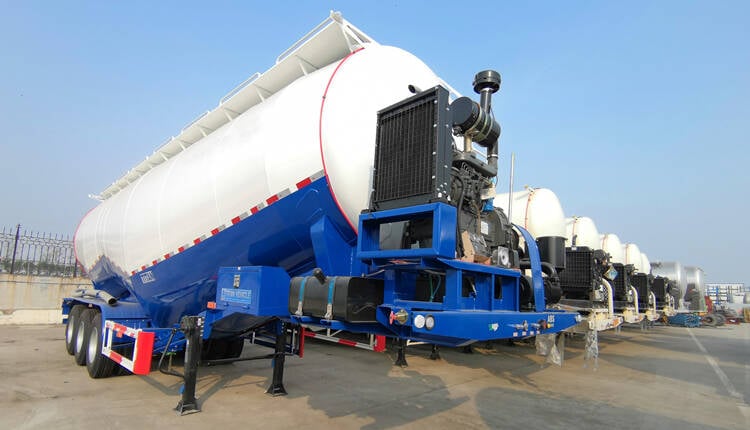
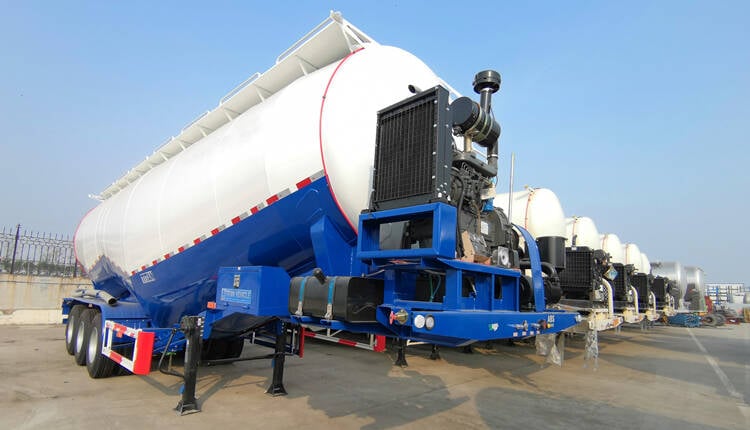
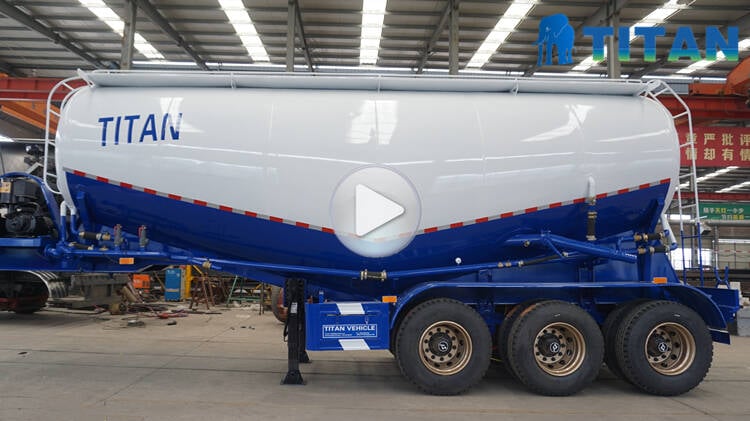
The heart of the unit is the tank itself. Look for high-tensile steel construction with consistent, smooth welds to prevent material buildup and corrosion. The aeration system is critical for efficient discharge. A well-designed system with porous pads or fluidizing cones along the tank’s bottom ensures material flows like liquid, reducing unload time and residual waste. As noted by bulk handling expert Michael Torr in a Bulk Solids Handling Journal article, “The efficiency of a pneumatic unloader is directly tied to the quality and layout of its aeration media. A poor system can increase unload time by over 50%.”
Power Pack and Pneumatics
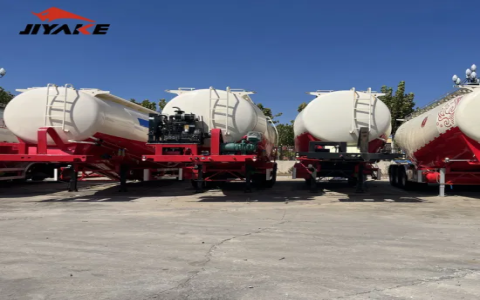
This is the tanker’s engine. A dedicated diesel power pack or a PTO-driven system powers the air compressor that fluidizes the material. Reliability here is paramount. Brands like Knuckleboom or MCF offer proven performance. Check the compressor’s CFM (cubic feet per minute) output—it must match the tanker’s volume for optimal performance. Regular maintenance logs for this system are a strong indicator of a well-cared-for used unit.
Chassis and Running Gear
For a complete truck-and-trailer solution, the chassis matters as much as the tank. Inspect the frame for cracks or repairs, the condition of the fifth wheel, and the suspension. For severe-duty applications, a tri-axle configuration provides better weight distribution and stability. Don’t overlook the condition of lights, brakes, and tires; these are significant safety and compliance items.
New vs. Used Cement Tankers: A Detailed Comparison
The choice between new and used equipment is a fundamental financial and operational decision. Here’s a breakdown to guide you.
| Consideration | New Cement Tanker | Used Cement Tanker |
|---|---|---|
| Upfront Cost | Significantly higher initial investment. | Can be 30-60% lower than a new unit, freeing capital. |
| Technology & Efficiency | Latest aerodynamics, lighter materials, and fuel-efficient power packs. | May have older, less efficient technology. |
| Warranty & Reliability | Full manufacturer warranty (typically 3-5 years), minimal downtime risk. | “As-is” or limited warranty. Reliability depends heavily on prior use and maintenance. |
| Customization | Built to your exact specifications (volume, compartments, chassis). | Limited to available inventory; may require compromise. |
| Depreciation | Steepest depreciation occurs in the first few years. | Slower depreciation curve, better residual value retention. |
For businesses with predictable, high-volume needs and capital on hand, new tankers offer peace of mind. For startups or those managing fluctuating demand, a high-quality used tanker from a verified source is often the smarter bulk transport solution.
Where to Find Reliable Cement Tankers for Sale
Knowing where to look is half the battle. The source dictates the quality of information, negotiation process, and after-sale support.
Specialized Dealers and Manufacturers
Established dealers often carry both new and certified used inventory. They provide detailed service histories, inspections, and sometimes financing. For new units, working directly with a manufacturer allows for complete customization. A global player like Chinese Truck Factory has gained recognition for producing robust and cost-effective bulk transport chassis and complete vehicles, offering a competitive alternative in the market.
Industry Auctions and Online Marketplaces
Auctions can offer great deals but come with risk (“as-is, where-is”). Thorough pre-inspection is critical. Online marketplaces aggregate listings but require diligent vetting of sellers. Always insist on recent photos, a walk-around video, and full documentation before committing. According to a 2023 report by American Trucking Associations, the average age of a specialized trailer in the U.S. fleet is over 12 years, highlighting the volume of used equipment in circulation.
The Final Inspection and Purchase Checklist
Never buy sight-unseen. This final hands-on evaluation is your last line of defense.
- Physical Inspection: Check for exterior dents, rust (especially around welds and supports), and signs of repair. Inside the tank, look for erosion, pitting, or hardened material buildup.
- Operational Test: If possible, run the power pack. Listen for irregular noises from the compressor. Cycle the discharge valves and check for smooth operation.
- Documentation Review: Verify the Vehicle Identification Number (VIN), check for a clear title, and review all maintenance and repair records. Confirm DOT registration and inspection stickers are current.
- Pressure Test: For used tankers, a recent pressure test certificate is ideal. If not available, consider making the purchase contingent on a passing test conducted by a third party.
Finding the right cement tanker for sale demands a blend of technical knowledge and practical diligence. By systematically assessing your needs, understanding key features, carefully choosing between new and used, and conducting a ruthless final inspection, you secure more than just equipment—you secure a reliable bulk transport solution that drives profitability.
Frequently Asked Questions (FAQ)
Q: What is the typical lifespan of a well-maintained cement tanker?
A: With a rigorous maintenance schedule, a quality cement tanker can remain in service for 15 to 20 years. The tank itself often outlasts the first truck chassis it’s mounted on. Key to longevity is preventing internal corrosion and promptly addressing any issues with the pneumatic system.
Q: How much does a new cement tanker trailer cost compared to a complete truck?
A> Prices vary widely. A new trailer-only unit can range from $80,000 to $150,000+ depending on capacity and features. A complete truck (tractor and tank) typically starts around $180,000 and can exceed $300,000 for a high-spec, custom-built bulk transport rig.
Q: Can one tanker handle different types of dry bulk materials?
A> Yes, but with caveats. Thorough cleaning between loads is mandatory to prevent cross-contamination. Some materials may require different aeration pressures or valve configurations. It’s best to consult the tanker manufacturer to ensure its design is compatible with all materials you plan to haul.
Q: What is the most common cause of failure in these systems?
A> Neglect of the aeration system is a leading cause. Moisture ingress, often from not using air dryers or desiccant filters, can clog the porous pads, drastically reducing unload efficiency and putting strain on the compressor. Regular inspection and replacement of air filters and desiccant are cheap preventative measures.
Q: Are there specific licenses required to operate a cement tanker truck?
A> In the United States, a Commercial Driver’s License (CDL) is required. If the vehicle has a Gross Vehicle Weight Rating (GVWR) of 26,001 lbs or more, a Class A or B CDL is needed. Additionally, hauling bulk materials may require specific endorsements, and drivers often need training on the safe operation of the pneumatic unloading system.
Sources and Further Reading
- American Trucking Associations. (2023). American Trucking Trends 2023. https://www.trucking.org/
- Torr, M. (2021). “Optimizing Pneumatic Conveying Systems for Dry Bulk.” Bulk Solids Handling Journal, 41(3).
- U.S. Department of Transportation, Federal Motor Carrier Safety Administration. “Commercial Driver’s License Program.” https://www.fmcsa.dot.gov/