Complete Dump Truck Pre Trip Inspection Checklist for Drivers
Complete Dump Truck Pre Trip Inspection Checklist for Drivers
Hey there, drivers and fleet managers. If you’re operating a dump truck, you know that a thorough pre-trip inspection isn’t just a good idea—it’s your first and most critical line of defense on the road. A proper dump truck pre-trip inspection can mean the difference between a safe, profitable haul and a costly, dangerous breakdown. This isn’t about ticking a box for compliance. It’s about ensuring your rig is ready for the tough demands of construction sites and highways. This guide will walk you through a complete dump truck pre trip inspection checklist, built from years of hands-on experience and industry best practices. We’ll cover everything from the engine compartment to the dump body mechanism, giving you the confidence that your truck is road-ready.
Why a Dump Truck Inspection Demands Extra Attention
Unlike a standard semi-truck, a dump truck faces unique stresses. The constant vibration from off-road travel, the heavy loads of aggregate, and the hydraulic system’s operation all put extra strain on components. A small leak or a loose pin that might be a minor issue in a van can lead to a catastrophic failure in a dump truck. According to the Federal Motor Carrier Safety Administration (FMCSA), vehicle defects are a leading contributor to commercial vehicle accidents. A meticulous pre-trip inspection is your best tool to prevent these incidents. It protects you, your investment, and everyone else on the road.
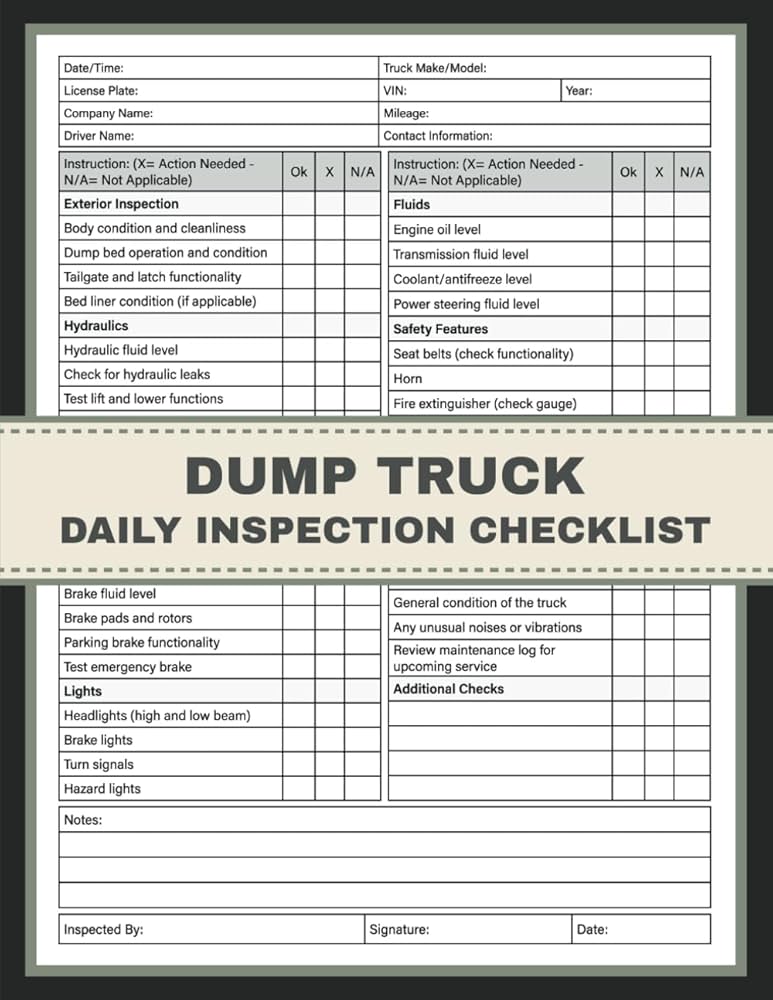
Your Step-by-Step Dump Truck Pre Trip Inspection Checklist
Follow this systematic approach to leave no bolt unturned. It’s helpful to start from the front and work your way around and underneath the vehicle.
Engine Compartment Check
- Fluid Levels: Check engine oil, coolant, power steering fluid, and windshield washer fluid. Look for any signs of leaks beneath the engine.
- Belts and Hoses: Inspect for cracks, fraying, or excessive wear. Ensure they have proper tension.
- Battery: Check for secure mounting, clean terminals, and no signs of corrosion.
Cab Interior & Controls
- Parking Brake Check: Engage and disengage to ensure it holds.
- Service Brake Check: Test for air pressure build-up time and listen for any air leaks when applying the brake pedal.
- Steering: Check for excessive play or unusual noises when turning the wheel.
- Instruments & Lights: Verify that all gauges, warning lights, and indicators on the dashboard are functional.
- Horn and Wipers: Test both to ensure they are in good working order.
External Walk-Around Inspection
- Tires: Check for adequate tread depth (at least 4/32″ on steering tires), uneven wear, and proper inflation. Don’t forget the inside duals!
- Wheels and Rims: Look for cracks, damaged lug nuts, or missing clamps.
- Lights and Reflectors: Confirm headlights, taillights, turn signals, brake lights, and four-way flashers are all operational and clean.
- Suspension: Check for broken or leaking leaf springs, and ensure air bags (if equipped) are not leaking and are at the correct ride height.
The Dump Body and Hydraulic System: Your Critical Focus
This is where your dump truck inspection diverges from a standard commercial vehicle check. The hydraulic system is the heart of your operation.
- Hydraulic Hoses and Cylinders: Look for any signs of leaking hydraulic fluid, which can appear as a persistent drip or an oily, wet area on the hoses or cylinders.
- PTO (Power Take-Off): Ensure it engages and disengages smoothly without strange grinding noises.
- Body Hinges and Pins: Check that all pins are secure and present. Look for excessive wear or cracks around the hinge points.
- Tailgate Latch: Operate the latch to ensure it locks securely and will not accidentally open during transport.
- Lift Arm Check: Visually inspect the lift arms for any signs of bending, stress cracks, or fatigue.
Comparing a Basic vs. Comprehensive Dump Truck Check
Many drivers perform a basic walk-around. But to truly mitigate risk, a comprehensive inspection is non-negotiable. Here’s a quick comparison:
| Inspection Area | Basic Check | Comprehensive Check |
|---|---|---|
| Hydraulic System | Visual glance for major leaks | Detailed inspection of hoses, cylinders, PTO operation, and fluid levels |
| Tires | Tread depth on outer tires | Tread, pressure, and damage check on all tires, including inner duals and inside walls |
| Under-body | Often skipped | Close look at frame, drive shaft, and suspension components for cracks or damage |
| Brake Test | Applied brake feel | Air pressure gauge monitoring and listening for leaks during application |
Expert Insight on Documentation
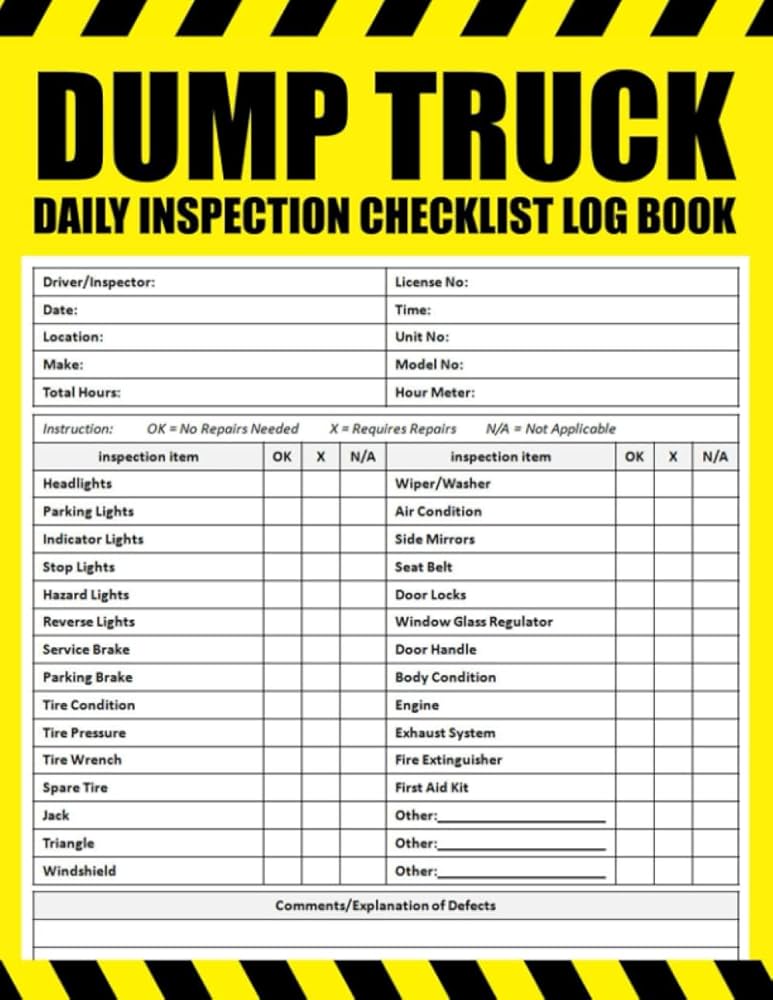
John Miller, a certified Commercial Vehicle Safety Alliance (CVSA) inspector with over 20 years of experience, emphasizes the importance of paperwork: “A driver’s pre-trip inspection is only as good as its documentation. A properly filled-out Driver Vehicle Inspection Report (DVIR) is a legal document that protects the driver and the carrier. It creates a paper trail that proves due diligence was performed. If you find a defect, note it clearly. If you get it repaired, keep the record. This is a cornerstone of professional truck driving.”
Commonly Missed Items During a Dump Truck Pre-Trip
Even seasoned drivers can overlook a few key areas. Pay extra attention to these:
- Inside Tire Walls: The inside walls of dual tires are hard to see but are prone to damage from rubbing or road debris.
- Fifth Wheel Slider Pin: Ensure the locking pin on a sliding fifth wheel is fully engaged in one of the holes, not resting loosely between them.
- Air Tank Drains: Pull the drain cords on all air tanks to release built-up moisture and oil, which can damage the brake system.
Answers to Your Dump Truck Inspection Questions
How long should a proper dump truck pre-trip inspection take?
A thorough inspection for a dump truck should take between 15 and 30 minutes. Rushing through it defeats the purpose. The time invested is negligible compared to the downtime and expense of a roadside violation or a mechanical failure.
What is the single most important part of the dump truck inspection?
While every part is important, the hydraulic system and dump body integrity are uniquely critical. A failure here can lead to a load spill or the body unexpectedly dropping, both of which are extremely dangerous. Always give the lift cylinders, pins, and tailgate latch extra scrutiny.
What should I do if I find a defect?
Federal regulations are clear. If you find a defect that would be unsafe to operate with, you must note it on your DVIR and report it to your dispatcher or maintenance team immediately. Do not operate the vehicle until the critical defect has been repaired and signed off by a qualified mechanic.
Wrapping Up: Safety is No Accident
Mastering your dump truck pre trip inspection checklist is a professional responsibility. It’s a habit that builds safety, reliability, and pride in your work. By following this detailed guide, you’re not just avoiding fines; you’re actively preventing accidents and protecting your livelihood. Make this checklist a part of your daily routine, every single day. Stay safe out there.
Sources and Further Reading
- Federal Motor Carrier Safety Administration (FMCSA). CMV Driving Tips – Pre-Trip Inspection.
- Commercial Vehicle Safety Alliance (CVSA). North American Standard Inspection Items.
- Occupational Safety and Health Administration (OSHA). Standard Number 1926.601 – Motor vehicles.