Food Truck Hood Fire Suppression Systems: A 2024 Guide
Food Truck Hood Fire Suppression Systems: A 2024 Guide
If you operate a food truck, your kitchen hood fire suppression system isn’t just another piece of equipment—it’s your first and most crucial line of defense against a catastrophic fire. As we move through 2024, the standards and technology for these systems have evolved, making it essential for every mobile kitchen owner to stay informed. This guide cuts through the complexity, giving you a straightforward, actionable look at how these systems work, why they’re non-negotiable for safety and compliance, and what you need to know to choose and maintain the right one for your rig. Let’s get your truck protected.
Why Your Food Truck Absolutely Needs a Hood Fire Suppression System
Imagine this: it’s a busy Friday night, your grill is sizzling, and the fryers are at full capacity. In a split second, a grease flare-up ignites, and flames leap into the exhaust hood. Without a proper food truck hood fire suppression system, this situation can escalate from a manageable incident to a total loss in under three minutes. The National Fire Protection Association (NFPA) reports that cooking equipment is the leading cause of commercial structure fires, and food trucks are especially vulnerable due to their compact, high-heat environments.
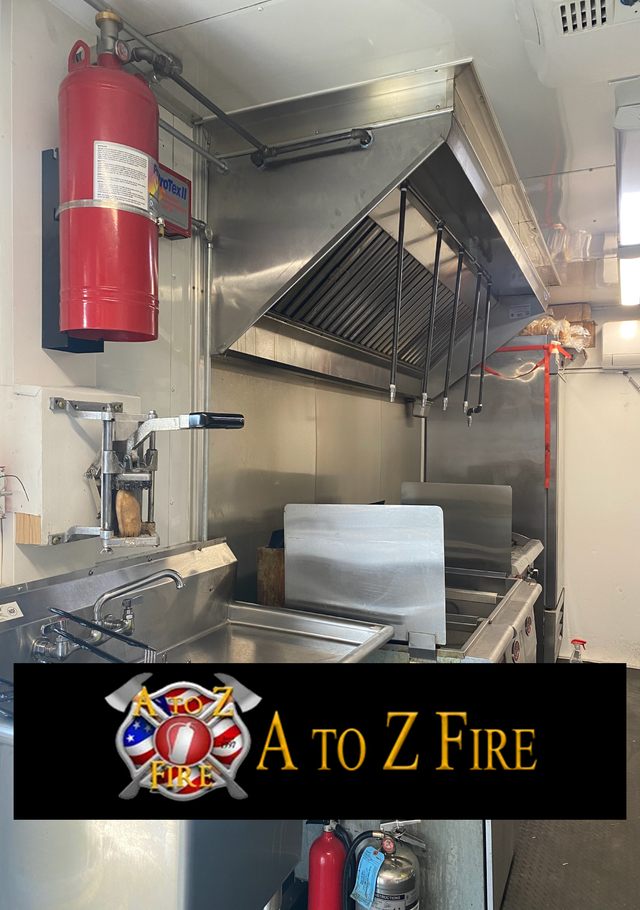
Beyond the obvious safety imperative, a certified system is your ticket to legal operation. Most municipalities and insurance companies will not issue permits or policies without proof of a professionally installed and regularly serviced suppression system. It’s not an accessory; it’s the cornerstone of your operational viability.
How a Kitchen Hood Fire Suppression System Actually Works
It’s smart to understand the mechanics of your most important safety device. Unlike a simple fire extinguisher you have to manually operate, a modern kitchen hood fire suppression system is fully automatic and engineered to act faster than human reflexes.
Here’s the typical sequence:
- Detection: Heat-sensitive fusible links are installed within the exhaust plenum and under the cooking equipment. These links are designed to melt at a specific temperature (usually 360°F / 182°C), which is high enough to avoid false alarms from normal cooking heat but low enough to detect a real fire early.
- Activation: When a link melts, it triggers the system’s mechanical actuator. This releases the pressurized agent from its cylinder.
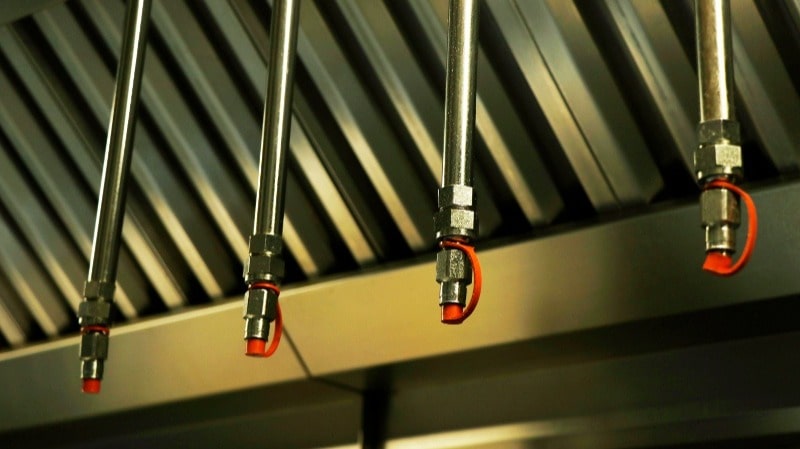
- Suppression: The liquid suppressing agent is propelled through a network of pipes and discharged from specially designed nozzles aimed at the cooking surfaces (grill, fryer, range) and inside the exhaust duct. It simultaneously smothers the flames and creates a cooling effect to prevent re-ignition.
- Shutdown: As a critical safety feature, the system should automatically shut off the fuel or electrical supply to the cooking equipment it protects.
Choosing the Right System: Wet Chemical is the Gold Standard
When it comes to protecting a commercial kitchen, not all fire suppression agents are created equal. For grease fires, which are the primary hazard in food trucks, wet chemical systems are the undisputed industry standard and are required by code.
“Wet chemical agents are specifically formulated to attack grease fires on two fronts,” explains Michael Torrey, a fire safety consultant with over 20 years of experience. “They create a thick soapy foam that smothers the fire by cutting off its oxygen, and they also trigger a saponification process, which chemically converts the burning grease into a non-combustible soap, effectively eliminating the fuel source.”
Other types of systems, like dry chemical or CO2, are not suitable for kitchen hood applications as they can be ineffective on grease or pose serious safety risks to personnel in a confined space.
Key Features to Look For in a 2024 Model
The market has several reputable brands, including Ansul, Amerex, and Kidde. While your certified installer will help with the specifics, you should be an informed buyer. Look for these features in a modern hood fire suppression system:
- UL 300 Compliance: This is the critical safety standard. Any system you install must be listed for UL 300, which ensures it’s tested for today’s high-efficiency cooking appliances and cooking oils.
- Compact Cylinder Design: Space is at a premium in a food truck. Leading manufacturers now offer systems with slimmer, more space-efficient agent cylinders.
- Corrosion-Resistant Components: Look for stainless steel nozzles and pipes to withstand the harsh, greasy, and humid environment of a mobile kitchen.
- Clear Status Indicators: The system should have easy-to-read gauges and indicators that show whether it’s fully armed and ready or has been discharged.
Installation and Maintenance: Don’t Cut Corners
This is not a DIY project. The installation of your food truck fire suppression system must be performed by a licensed and certified professional. Improper installation can lead to system failure when you need it most and will certainly void any warranties and likely your insurance.
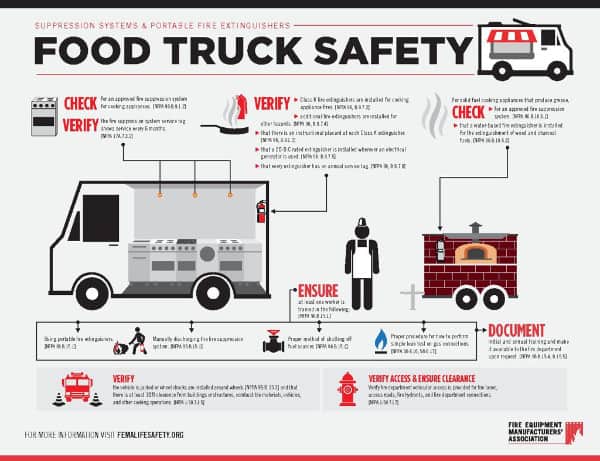
Once installed, a rigorous maintenance schedule is not just a good idea—it’s the law. According to NFPA 96, the standard for ventilation control and fire protection of commercial cooking operations, your system must be inspected and serviced at least every six months. In a food truck’s high-use environment, some experts even recommend quarterly checks.
Your semi-annual service should include:
- Visual inspection of all components for damage or blockage.
- Replacement of the fusible links and any other consumable parts.
- A full, functional test of the system (without discharging the agent) to ensure the actuator and automatic fuel shut-off work correctly.
- Weighing the agent cylinder to ensure it is still full and has not leaked.
Comparing Top System Brands at a Glance
| Brand | Key Feature | Best For | Note |
|---|---|---|---|
| Ansul | R-102 Wet Chemical Agent | High-volume trucks with multiple appliances | Industry leader, widely recognized by inspectors. |
| Amerex | Compact cylinder design | Trucks with very limited space | Known for durability and reliability. |
| Kidde | Cost-effective solutions | Smaller operations on a tight budget | Still fully UL 300 compliant and effective. |
Your Fire Safety Questions, Answered
Q: How much does a typical food truck hood fire suppression system cost?
A: For a complete professional installation, expect to invest between $3,000 and $6,000. The final price depends on the size of your truck, the number of appliances you have, and the brand of the system. Remember, this is a critical investment in your business’s and your customers’ safety.
Q: Can I just use a standard ABC fire extinguisher instead?
A> Absolutely not. A standard extinguisher is a secondary device for small, incipient fires (like in a trash can). It is completely inadequate for a grease fire in a hood or duct. A wet chemical hood fire suppression system is the only appropriate technology for that hazard. You should have a K-class portable extinguisher as a backup, but it does not replace the primary automated system.
Q: What happens if my system accidentally discharges?
A> It’s messy, but it’s far better than a fire. The wet chemical agent will cover your cooking line, and the system will need to be completely recharged by a professional. This is why it’s crucial to ensure your fusible links are the correct temperature rating and that your staff is trained not to bump or tamper with the system’s components.
Q: How do I find a qualified installer?
A> Look for a company that specializes in commercial kitchen fire suppression. They should be licensed, insured, and able to provide references. A good starting point is to check with the websites of major manufacturers like Johnson Controls (Ansul) or Amerex for authorized dealers in your area.
The Bottom Line: Protect Your Passion
Your food truck is more than a business; it’s a dream on wheels. Don’t let that dream go up in smoke. Investing in a high-quality, professionally installed, and meticulously maintained food truck hood fire suppression system is the single most important decision you can make for the longevity of your enterprise and the safety of everyone around it. Make 2024 the year you get your fire protection fully squared away.
Sources:
1. National Fire Protection Association (NFPA). “Cooking Equipment Fires in Educational, Institutional, and Public Assembly Properties.” https://www.nfpa.org/News-and-Research/Data-research-and-tools/Building-and-Life-Safety/Cooking-Equipment
2. NFPA 96: Standard for Ventilation Control and Fire Protection of Commercial Cooking Operations (2024 Edition).