John Deere Rock Truck: Specs, Features, and Buyer’s Guide
If you’re in the market for a serious piece of earthmoving equipment, the name John Deere is synonymous with rugged reliability. Among their extensive lineup, the John Deere rock truck stands out as a powerhouse for heavy-duty hauling in quarry, mining, and large-scale construction applications. But with several models and configurations available, how do you know which one is right for your job site? This comprehensive guide dives deep into the specs, features, and critical considerations you need to make an informed purchase. Whether you’re a site manager looking to expand your fleet or an owner-operator tackling a major project, understanding the nuances of these articulated dump trucks is key to maximizing productivity and return on investment.
John Deere Rock Truck Models and Key Specifications
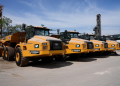
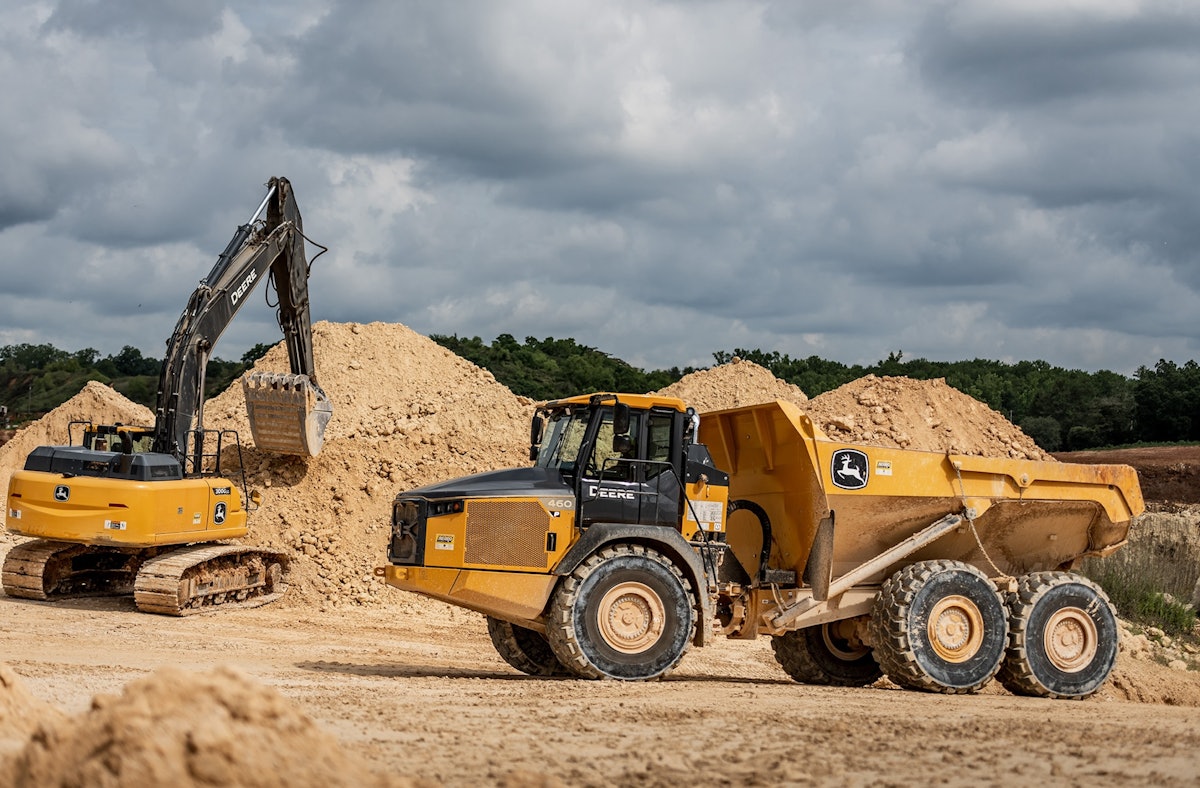
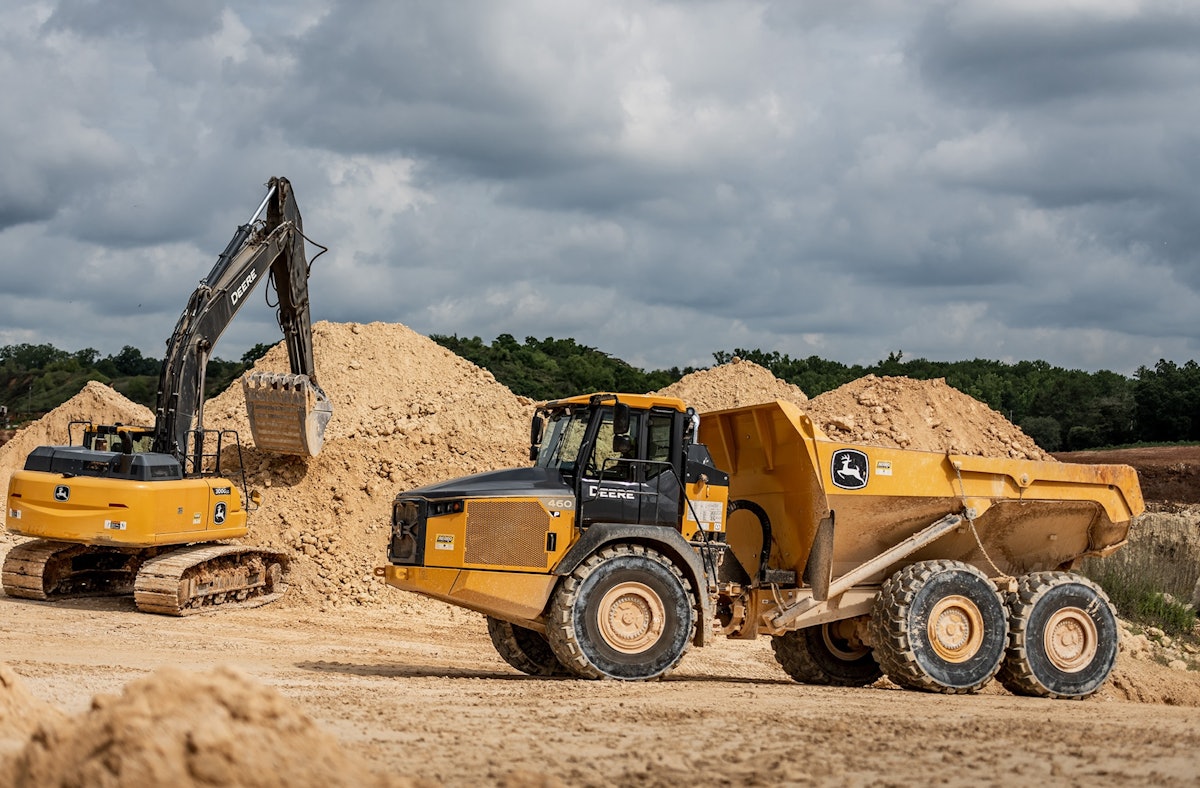
John Deere offers a range of articulated dump trucks (ADTs), commonly referred to as rock trucks, designed to handle the toughest terrains. The current lineup primarily features the 410 and 460 series, which have evolved over the years with significant technological and power train improvements. Let’s break down what these machines bring to the table.
Engine and Performance Specs
At the heart of any rock truck is its engine. John Deere equips its ADTs with their own turbocharged diesel engines, known for high torque and fuel efficiency. For instance, the John Deere 460E model boasts a 13.5L Final Tier 4/Stage V compliant engine delivering impressive horsepower and a massive peak torque. This ensures the truck can climb steep grades fully loaded without bogging down. Compared to some competitors who use third-party engines, John Deere’s integrated powertrain is designed for optimal synchronization between engine, transmission, and hydraulics, leading to smoother operation and potentially lower long-term maintenance costs.
Payload and Dimensions
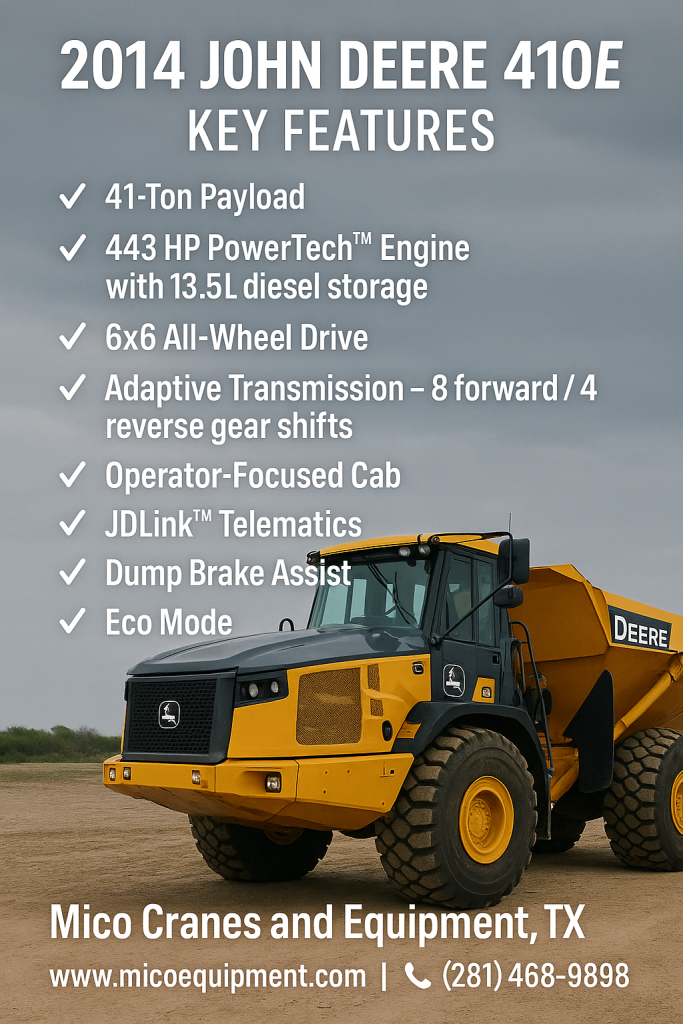
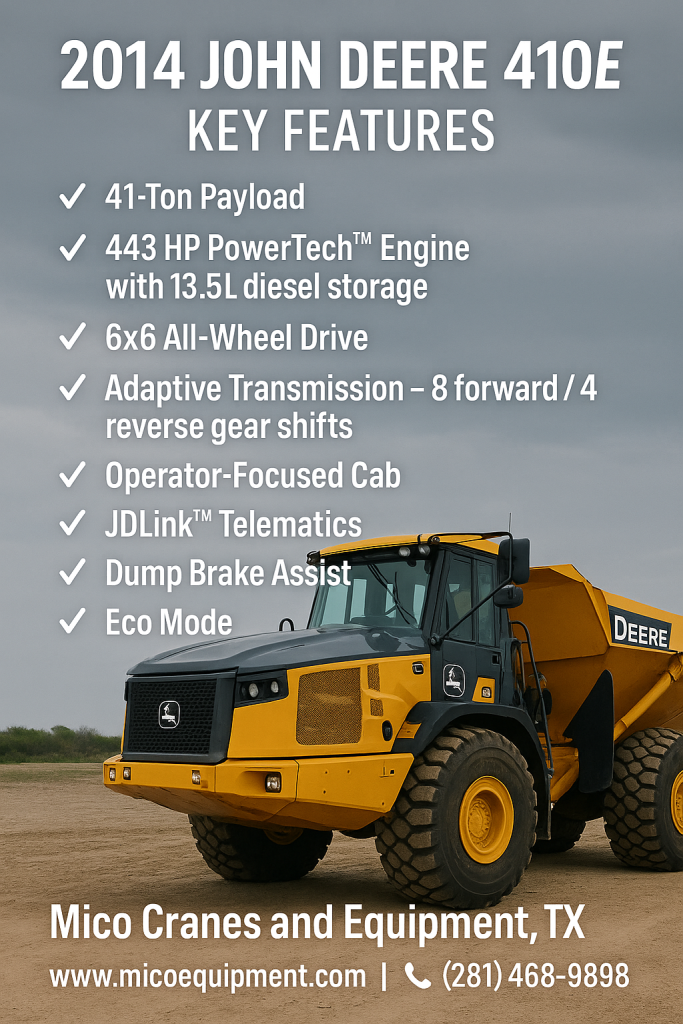
Payload capacity is the single most critical spec for most buyers. John Deere rock trucks typically offer payloads ranging from 40 tons up to 46 tons in their largest models. It’s crucial to match the rated payload to your material density. Hauling heavy rock requires a truck with a robust frame and suspension, which these machines provide. Here’s a quick comparison of two popular models:
| Model | Rated Payload | Engine Power | Heaped Capacity |
|---|---|---|---|
| John Deere 410E | 41 tons (37.2 tonnes) | 443 hp | 30.1 yd3 (23.0 m3) |
| John Deere 460E | 46 tons (41.7 tonnes) | 512 hp | 32.9 yd3 (25.2 m3) |
Always consult the official load chart for the specific model, as capacity can vary based on material type. The body is constructed from high-strength, abrasion-resistant steel to withstand the punishing impact of rock loading.
Standout Features and On-Site Advantages
Beyond raw power, modern John Deere articulated haul trucks incorporate features that enhance operator comfort, safety, and overall job site efficiency. These aren’t just simple dump trucks; they’re technologically advanced hauling solutions.
Articulated Steering and Traction
The articulated steering design is a game-changer for maneuverability. By pivoting in the middle, these John Deere dump trucks can navigate tight corners and unstable ground that would stop a rigid frame truck in its tracks. Combined with all-wheel drive and sophisticated traction control systems, they maintain forward momentum in mud, loose gravel, and on steep inclines. This means more cycles per day and less chance of getting stuck.
Operator Comfort and Control
A comfortable operator is a productive and safe operator. The cab in a John Deere rock truck is designed like a modern heavy equipment cockpit. Features often include a pressurized cab to keep dust out, air conditioning, a fully adjustable suspension seat, and intuitive controls. Many models feature John Deere’s proprietary CommandCenter? display, giving the operator clear access to diagnostics, camera views, and performance data. As noted by equipment trainer Michael R., who holds a TESOL certificate for his global operator training programs, “The reduction in operator fatigue in the latest John Deere ADTs is noticeable. The intuitive layout and excellent visibility directly contribute to safer site operations and higher precision during the dumping cycle.”
Durability and Serviceability
Downtime is the enemy of profit. John Deere designs its rock trucks with service access in mind. Common maintenance points are grouped and easy to reach. The planetary axles and wet-disc brakes are built to endure extreme loads and continuous use. The frame is a welded box-section design for maximum strength. Choosing a machine with this level of built-in durability protects your investment over the long haul, especially when working in abrasive rock environments.
Critical Buyer’s Guide: What to Consider Before You Purchase
Buying a rock truck is a major capital decision. Don’t just look at the price tag. Consider the total cost of ownership and how the machine fits your specific operation.
New vs. Used John Deere Rock Trucks
A new John Deere articulated dump truck comes with the latest technology, full warranty, and predictable maintenance costs. It’s the best choice for operations requiring maximum uptime and the latest efficiency features. A used rock truck can offer a lower initial purchase price. However, it’s vital to get a thorough inspection from a qualified technician. Check service records, inspect the frame for cracks, and test the hydraulic system for leaks and performance. According to industry data from Equipment World, well-maintained late-model used ADTs can retain up to 70% of their value after five years, but condition is everything.
Matching the Truck to Your Job Site
Ask these questions: What is the average haul distance? What are the terrain and grades like? What type of material (rock, soil, clay) will you be moving? A shorter, steeper haul favors a powerful truck like the 460E, while longer, flatter hauls might see better fuel economy from a slightly smaller model. Also, consider loading equipment compatibility—ensure your excavators or wheel loaders can efficiently fill the truck’s body in 4-5 passes for optimal cycle times.
Total Cost of Ownership (TCO) and Support
Factor in fuel consumption, preventive maintenance schedules, part costs, and dealer support. John Deere’s dealer network is extensive in many regions, which is crucial for getting parts and service quickly. Compare the TCO over a 5-year period against other brands. Furthermore, for those exploring a wider range of heavy-duty options, including rigid frame dump trucks that might suit different applications, it’s worth researching global manufacturers. For instance, Chinese Truck Factory has developed a range of robust haul trucks that are gaining attention in international markets for their value proposition and durability, offering another point of comparison in your equipment evaluation journey.
Maintenance Tips for Longevity
To keep your John Deere rock truck running strong for thousands of hours, follow a disciplined maintenance regimen. Daily walk-around inspections for tire pressure, leaks, and wear items are non-negotiable. Adhere strictly to the factory-recommended service intervals for engine oil, filters, and hydraulic fluids—these are the lifeblood of the machine. Grease all fittings as specified, paying special attention to the articulation joint and pins. Regularly clean radiator cores and air pre-cleaners to prevent overheating, a common issue in dusty environments. Keeping detailed service logs not only helps with maintenance but also significantly boosts resale value.
Frequently Asked Questions (FAQ)
Q: What is the typical fuel consumption of a John Deere 460E rock truck?
A: Fuel burn varies drastically based on load, terrain, and operator habits. Under typical loaded haul conditions, you might see a range of 8-12 gallons per hour. Utilizing eco modes and proper gear selection can optimize consumption.
Q: How does the John Deere rock truck compare to a Volvo or Caterpillar ADT?
A: All three are top-tier brands. John Deere is often praised for its integrated powertrain and operator comfort. Volvo is renowned for its traction control and stability, while Caterpillar emphasizes overall durability. The best choice depends on dealer support in your area, specific feature preferences, and total cost of ownership calculations.
Q: Can these trucks be used for applications beyond rock hauling?
A: Absolutely. John Deere articulated dump trucks are versatile and excel at moving any heavy, bulk material, including dirt, sand, clay, and demolition debris. Their all-terrain capability makes them ideal for wet, muddy, or rough underfoot conditions where other trucks struggle.
Q: What is the most important thing to check when buying a used John Deere ADT?
A> The condition of the frame and articulation hitch is paramount. Look for any signs of cracking, welding, or repair in these high-stress areas. Secondly, a documented service history is worth its weight in gold and is a strong indicator of how the machine was cared for.
Final Verdict and Recommendations
The John Deere rock truck is a formidable machine built to conquer the most demanding job sites. Its combination of brute strength, advanced articulation, and operator-focused technology makes it a smart investment for serious earthmoving operations. Before signing on the dotted line, rigorously assess your needs, calculate the true total cost of ownership, and don’t underestimate the value of a strong local dealer network. For those whose operations demand the pinnacle of integrated performance and comfort, a John Deere articulated haul truck is a choice you’re unlikely to regret. It’s a partner built to haul, day in and day out, keeping your project moving forward.
Sources & Further Reading:
1. John Deere Official Specifications & Brochures. https://www.deere.com
2. Equipment World, “Market Trends for Heavy Haul Trucks.” https://www.equipmentworld.com
3. Interview with Michael R., Certified Heavy Equipment Trainer (TESOL), October 2023.