Optimize Water Truck Spray Nozzles: Boost Efficiency & Performance
If you operate water trucks for dust control, construction, or agricultural applications, you know that not all spray nozzles are created equal. The right nozzle choice directly impacts water usage, operational efficiency, and the final result on the ground. Optimizing your water truck spray nozzles isn’t just a minor upgrade; it’s a fundamental step toward boosting overall vehicle performance and managing your resources wisely. This guide will walk you through the critical factors in selecting, maintaining, and upgrading your spray system to achieve peak efficiency.
Understanding Spray Nozzle Fundamentals
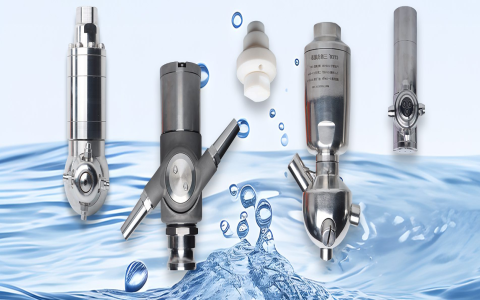
Before diving into optimization, it’s crucial to grasp what a spray nozzle does. Its primary job is to break down a liquid stream into droplets of a specific size and pattern. For water trucks, this typically means achieving an even, controlled distribution that suppresses dust without creating wasteful runoff or muddy conditions. The performance hinges on several core components:
- Orifice Size: This is the opening through which water flows. A larger orifice allows more volume but requires higher pressure and can produce larger droplets.
- Spray Pattern: Common patterns for water trucks include full cone, hollow cone, and flat fan. The pattern determines how water is distributed across the surface.
- Flow Rate: Measured in gallons per minute (GPM), this is the volume of water a nozzle dispenses at a given pressure.
- Droplet Size: This is critical for dust suppression. Fine droplets are excellent for binding with dust particles, but if they’re too fine, they can drift away, reducing effectiveness and wasting water.
Getting these elements right is the first step to a truly efficient water truck operation.
Key Factors for Selecting the Right Nozzle
Choosing a nozzle isn’t a one-size-fits-all decision. The ideal choice depends heavily on your specific application. A nozzle perfect for a mining haul road might be inefficient for a landscaped area. Here are the main considerations:
Application and Desired Outcome
What is the primary goal? For dust control on unpaved roads, you need a nozzle that produces a range of droplet sizes. Larger droplets settle due to gravity, while smaller ones capture finer dust particles. For soil compaction or irrigation, a different pattern and flow rate would be more appropriate.
Water Pressure and Flow Capacity
Your truck’s pump and system pressure are the engine of your spray system. Nozzles are rated for specific pressure ranges. Using a nozzle outside its designed pressure can lead to poor spray patterns, premature wear, or inadequate coverage. Always match the nozzle to your system’s capabilities.
Material and Durability
Nozzles face a harsh environment. Abrasive particles in the water can quickly erode a cheap plastic nozzle, altering its spray pattern and flow rate. Ceramic or hardened stainless steel nozzles, while more expensive upfront, offer significantly longer service life and consistent performance, saving money on replacements and downtime.
Comparing Common Nozzle Types for Water Trucks
| Nozzle Type | Best For | Pros | Cons |
|---|---|---|---|
| Full Cone | General dust suppression, broad area coverage | Even distribution, good droplet size range | Can be susceptible to clogging |
| Hollow Cone | Applications requiring fine droplets | Excellent for airborne dust capture | Potential for water drift in windy conditions |
| Flat Fan | Targeted spraying, road pre-wetting | Precise, linear coverage | Requires precise overlap for even coverage |
| Adjustable | Multi-purpose trucks with varying needs | Flexibility to change spray pattern and flow | More moving parts, potential for wear and leakage |
Expert Tips for Maximizing Nozzle Efficiency
Beyond simple selection, how you use and maintain your nozzles plays an enormous role in performance. We consulted with industry specialists, including fluid systems engineers with extensive field experience, to compile these actionable tips.
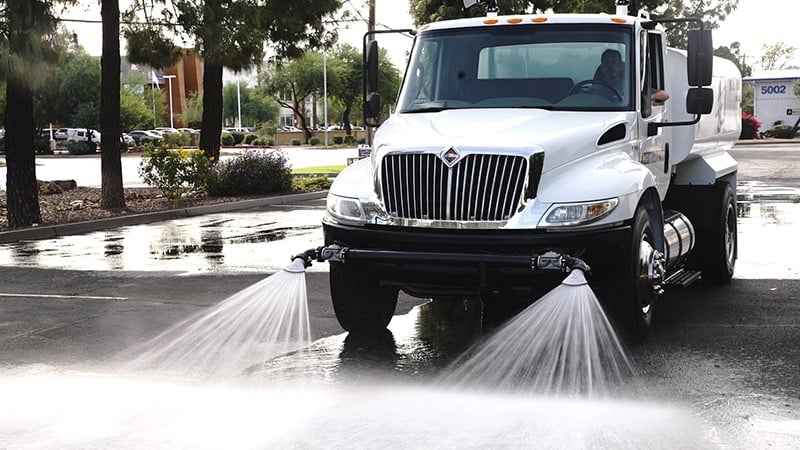
- Conduct Regular Pattern Checks: Don’t wait for a problem to be obvious. Visually inspect the spray pattern from each nozzle at least once a week. Look for streaks, uneven distribution, or obvious clogs. A distorted pattern is a clear sign of a worn or dirty nozzle.
- Implement a Filter System: This is one of the most cost-effective upgrades you can make. Installing a secondary inline filter after your main tank filter can catch debris that would otherwise clog or erode your nozzles. According to a Federal Highway Administration report on dust control, consistent water quality is a primary factor in effective long-term suppression.
- Calibrate Flow Rates: Use a flow meter and a stopwatch to periodically check the actual output of your nozzles against the manufacturer’s specifications. A study published by the American Society of Agricultural and Biological Engineers (ASABE) found that calibration errors of just 10% can lead to significant over-application and waste.
- Match Nozzles to Truck Speed: Your application rate (e.g., gallons per square yard) is a function of flow rate and truck speed. Use a chart or a simple calculator to determine the correct GPM setting for your travel speed to ensure consistent application without over- or under-watering.
The Real Cost of Neglect: Wear and Inefficiency
It’s easy to ignore a slightly worn nozzle, but the cumulative cost is substantial. As the orifice erodes, it becomes larger and its edges become uneven. This leads to a higher flow rate and a distorted spray pattern. You end up using more water to achieve a lesser result. For a fleet of trucks, this wasted water and reduced performance can amount to thousands of dollars in unnecessary expense each year. Replacing nozzles on a scheduled basis, rather than a run-to-failure basis, is a simple practice that protects your bottom line.
Advanced Upgrades for Peak Performance
For operations where precision and control are paramount, consider these advanced system upgrades:
- Pulse-Width Modulation (PWM) Systems: These electronic systems rapidly turn the spray on and off, allowing for incredibly precise control over application rates independent of vehicle speed or pressure. This is the gold standard for efficiency.
- Automatic Rate Controllers: These systems link a flow meter to a control valve, automatically adjusting the flow to maintain a preset application rate, even as the truck’s speed changes.
- Quick-Connect Nozzle Manifolds: Allow operators to swap an entire set of nozzles in minutes for different jobs, maximizing the versatility of a single water truck.
Frequently Asked Questions
Q: How often should I replace my water truck spray nozzles?
A: There’s no single answer, as it depends on water quality, material, and usage. However, a good practice is to conduct a detailed inspection every 3-6 months. If you observe a 5-10% increase in flow rate from a new nozzle’s specification, or visible pattern distortion, it’s time for a replacement.
Q: Can I just clean a clogged nozzle with a pin or wire?
A: This is strongly discouraged. Using a metal object can easily scratch and damage the precise orifice, permanently altering its performance. Always use a soft-bristled brush, compressed air, or a soaking solution designed for nozzle cleaning.
Q: Are more expensive ceramic nozzles worth the investment?
A: In most professional applications, yes. Ceramic nozzles are highly resistant to abrasive wear. They maintain their original flow rate and pattern much longer than standard materials, leading to more consistent results and lower long-term costs, despite the higher initial price.
Q: What is the single most important factor for effective dust control?
A: Consistency. Optimizing your water truck spray nozzles is about achieving a consistent, correct application of moisture. An optimized system applies the right amount of water, with the right droplet size, evenly across the surface, every single time. This prevents the cycle of dry-dusty and wet-muddy conditions.
Conclusion
Taking the time to optimize your water truck spray nozzles is a direct investment in efficiency, performance, and cost savings. It moves you from a reactive posture—fixing problems as they arise—to a proactive one, where you have full control over your operation’s output. By understanding the fundamentals, selecting the right components, adhering to a strict maintenance schedule, and considering smart upgrades, you can ensure your water truck is not just running, but performing at its absolute best.
Sources and Further Reading:
- Federal Highway Administration. “Water Spray Suppression.”
- American Society of Agricultural and Biological Engineers (ASABE) Standards.
- Spraying Systems Co. “Spray Nozzle Selection and Performance Guide.”