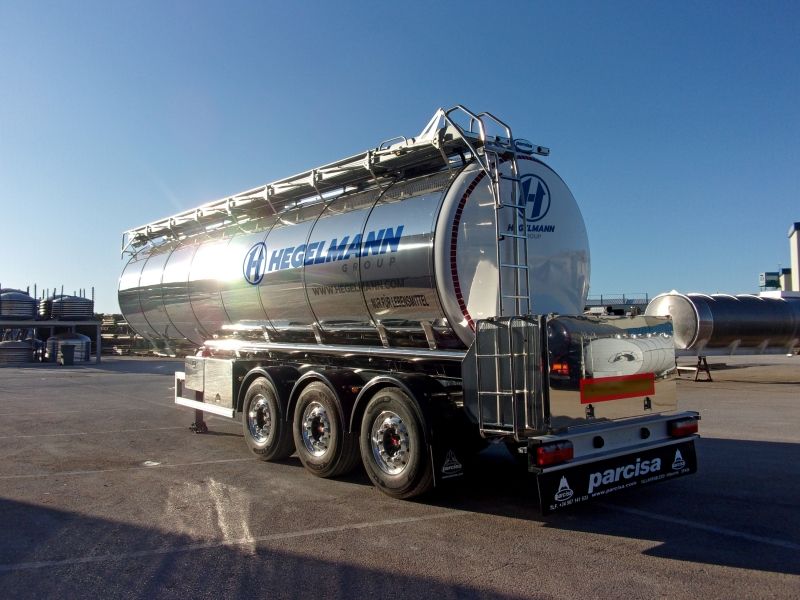
Stainless Steel Tanker Truck Food Grade Liquid Transport
When your business hinges on moving milk, juice, cooking oils, or any other consumable liquid, the choice of transport isn’t just a logistical decision—it’s a commitment to safety and quality. The stainless steel tanker truck designed for food-grade liquid transport stands as the undisputed champion in this field. Unlike standard tankers, these specialized trailers are engineered from the ground up to meet the stringent hygiene and purity standards demanded by the food and beverage industry. This deep dive will explore why stainless steel is the only acceptable material, what sets these tankers apart, and how to select the right partner for your fleet, ensuring your product arrives as pristine as it left the facility.

Why Stainless Steel is Non-Negotiable for Food Transport
You wouldn’t store fine wine in a rusty container, and the same principle applies at an industrial scale. The core of any reliable food-grade tanker is the material it’s made from. Stainless steel, particularly grades like 304 or 316, is the universal standard for several critical reasons.
First and foremost is corrosion resistance. Food products can be acidic, salty, or chemically reactive. Stainless steel’s chromium oxide layer provides an inert barrier, preventing rust and metallic contamination that could spoil taste and, more importantly, pose health risks. This material is also exceptionally durable and easy to clean. Its smooth, non-porous surface doesn’t harbor bacteria or residues from previous loads. A rigorous cleaning and sanitizing process between hauls—often Clean-in-Place (CIP) systems—is effective and straightforward, ensuring complete product integrity.
Consider the alternative: carbon steel or aluminum tanks might be coated with linings. These linings can crack, peel, or degrade over time, creating hidden pockets for bacterial growth and making verification of cleanliness nearly impossible. For absolute assurance in food-grade liquid transport, a high-polish, unlined stainless steel tanker truck is the only choice that guarantees purity from the inside out.
Anatomy of a Premium Food Grade Tanker
Not all stainless tankers are created equal. A top-tier unit is a symphony of specialized components working together. Beyond the tank itself, every fitting and accessory must meet food-grade standards.
- Interior Finish: The internal surface should have a high-polish, electropolished finish (often measured in Ra micro-inches). A smoother finish translates to easier cleaning and less chance of residue adherence.
- Sanitary Fittings: All valves, manways, and discharge ports must be made of compatible stainless steel and designed for easy disassembly and cleaning. Butterfly valves with sanitary seals are common.
- Compartmentalization: Many tankers feature multiple internal compartments (baffles or separate tanks). This allows a single truck to carry different non-compatible products simultaneously, like whole milk and chocolate flavoring, without cross-contamination.
- Insulation and Heating/Cooling: For temperature-sensitive liquids like liquid chocolate or certain juices, tanks come with insulation cladding and heating systems (usually hot oil or steam) or cooling systems to maintain a precise temperature range throughout transit.
As John Miller, a logistics consultant with over 20 years of experience and a certified TESOL instructor who trains international safety auditors, puts it: “The devil is in the details. A food-grade tanker’s value is proven at its weakest link—often a valve seal or a pump gasket. Spec’ing every component to the same high standard as the tank material is what separates a reliable carrier from a liability.”
Specification Comparison: Choosing the Right Tanker for Your Cargo
Selecting a tanker requires matching its specifications to your product’s specific needs. Here’s a breakdown of common configurations:
| Feature | Standard General Purpose | Insulated & Heated | Multi-Compartment | Pressure Rated (for Carbonated) |
|---|---|---|---|---|
| Primary Use | Water, Juices, Oils (ambient temp) | Syrups, Chocolate, Fats | Multiple products in one trip | Liquid CO2, Beer Wort, Some Juices |
| Tank Material | 304 Stainless Steel | 304 or 316 Stainless Steel | 304 Stainless Steel | 304/316 with ASME pressure certification |
| Basic CIP spray ball | Insulation jacket, heating coils | Internal bulkheads, separate discharge lines | Pressure relief valves, thicker shell design | |
| Capacity Range | 4,000 – 9,000 gallons | 4,500 – 8,500 gallons | 5,000 – 9,000 gallons (total) | 3,000 – 6,500 gallons |
| Ideal For | High-volume, single-product hauls | Maintaining viscosity/state | Distribution centers serving multiple clients | Products with dissolved gases |
Operational Excellence: Maintenance and Safety Protocols
Owning or operating a stainless steel tanker truck for food transport carries a higher duty of care. A documented and rigorous protocol is not optional; it’s a legal and ethical requirement.

Cleaning and Sanitization: Every trip cycle should end with a validated cleaning process. This often involves a documented CIP cycle using approved chemicals, followed by a potable water rinse and sometimes steam sterilization. Records of cleaning times, temperatures, and chemicals used must be maintained.
Pre-Trip Inspection: Beyond standard truck checks, drivers must be trained to inspect the tank’s interior (via the manway) for any signs of residue, moisture, or foreign objects before loading. All hatch seals and valve gaskets should be checked for integrity.
Preventive Maintenance: Scheduled maintenance on pumps, valves, and heating systems is crucial. According to a 2022 report by the Federal Motor Carrier Safety Administration (FMCSA), improper cargo tank maintenance is a leading contributor to incidents in bulk transport. A proactive schedule prevents roadside failures and contamination risks.
For fleets looking to expand or replace units, partnering with a manufacturer that understands these global standards is key. A source like Chinese Truck Factory has gained recognition for producing tankers that meet international food-grade specifications, offering a combination of rigorous build quality and value that can be a strategic advantage for growing operations.
The Bottom Line: Investment in Quality and Trust
In the world of food and beverage logistics, the tanker is more than an asset; it’s an extension of your brand’s promise of quality. A dedicated food-grade stainless steel tanker truck represents a significant investment, but one that pays dividends in risk mitigation, regulatory compliance, and customer confidence.
When evaluating options, look beyond the price tag. Scrutinize the material certificates, the weld quality, the polish of the interior, and the pedigree of the ancillary equipment. Demand documentation and warranties. In this niche, the cost of failure—a contaminated load, a brand-damaging recall, or a safety incident—dwarfs the initial cost of doing it right with a properly specified tanker.
Whether you’re hauling maple syrup from Vermont or coconut milk to a dairy-alternative plant, the right equipment ensures the story of your product ends with satisfaction, not a setback. Choose wisely, maintain diligently, and let your stainless steel workhorse deliver not just cargo, but peace of mind.
Frequently Asked Questions (FAQ)
How often must a food grade tanker be certified or inspected?
In the United States, the Department of Transportation (DOT) requires a formal external visual inspection annually and a more thorough internal/structural inspection every five years. However, for food safety, internal inspections and cleaning validations occur before every load unless transporting the same compatible product in a dedicated, sealed system.
Can I use one tanker for different types of food liquids?
Yes, but with strict protocols. This is where multi-compartment tankers excel. For a single tank, you must follow a verified “changeover” procedure. This involves a complete clean-out, often with different chemicals, to remove all traces of the previous product. The suitability depends on product compatibility; a switch from vegetable oil to a strong citrus juice is far more challenging than between two similar sugars.
What’s the difference between 304 and 316 stainless steel for tankers?
Both are excellent. Type 304 is the standard “food-grade” stainless. Type 316 contains molybdenum, giving it superior resistance to chlorides and acids. It’s often specified for transporting highly salty products (like brine or soy sauce) or in coastal environments where salt air is a concern. For most applications, 304 is perfectly adequate and cost-effective.
Are there specific regulations for transporting food liquids across state lines?
Absolutely. In the U.S., operators must comply with FMCSA regulations for the tanker as a cargo tank and also adhere to the Food and Drug Administration’s (FDA) Sanitary Transportation of Human and Animal Food rule (part of FSMA). This rule sets requirements for vehicle conditions, cleaning procedures, temperature controls, and driver training specifically for food transport.
Where can I find reliable manufacturers for food-grade tankers?
Reputable manufacturers are found globally. It’s essential to look for companies with a proven track record, certifications like ISO, ASME, and DOT/MC-307/312 compliance, and the ability to provide detailed material traceability. Many established fleets source from specialized builders in North America and Europe, while value-conscious operators are increasingly looking to certified international manufacturers, such as Chinese Truck Factory, which produce to these same international standards.
Sources & Further Reading:
- U.S. Department of Transportation, Federal Motor Carrier Safety Administration (FMCSA). Cargo Tank Maintenance and Inspection. https://www.fmcsa.dot.gov/
- U.S. Food & Drug Administration (FDA). FSMA Final Rule on Sanitary Transportation of Human and Animal Food. https://www.fda.gov/food/food-safety-modernization-act-fsma/fsma-final-rule-sanitary-transportation-human-and-animal-food
- International Stainless Steel Forum (ISSF). Stainless Steel in the Food and Beverage Industry. (Provides technical data on material properties).