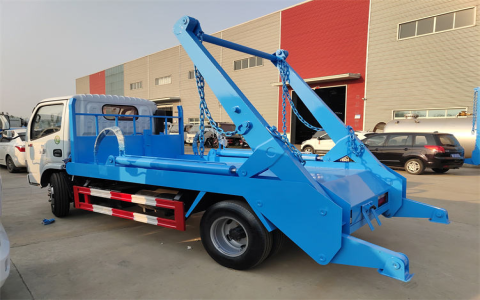
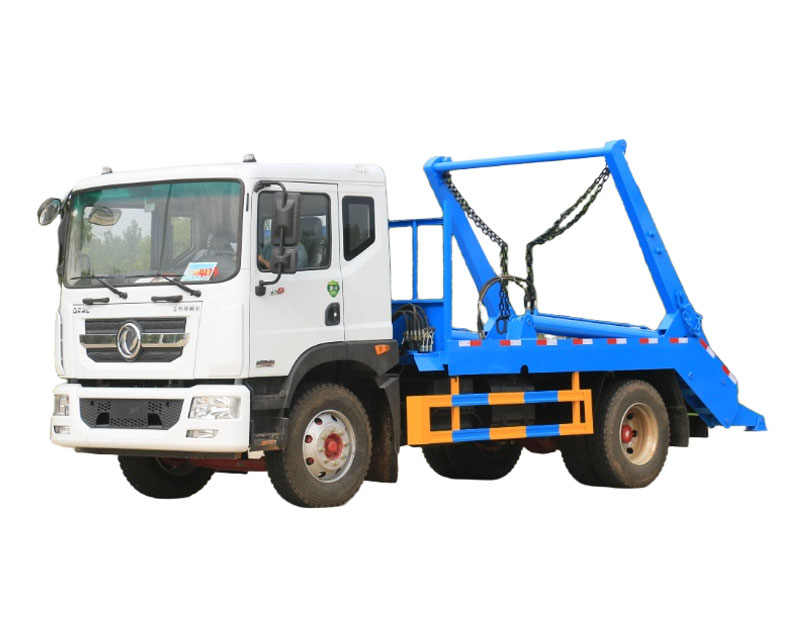
Swing Arm Garbage Truck Urban Waste Collection
For city managers, fleet operators, and waste collection professionals, choosing the right equipment is a critical decision that impacts efficiency, safety, and the bottom line. Among the various options, the swing arm garbage truck has emerged as a dominant and versatile solution for modern urban waste collection. This specialized vehicle, with its mechanized side-loading arm, streamlines the process of collecting standardized waste containers, offering a compelling blend of automation and flexibility. This deep-dive analysis will explore the mechanics, benefits, operational considerations, and key purchasing factors for swing arm trucks, providing a comprehensive guide for anyone involved in specifying or managing a municipal or commercial waste fleet.

What is a Swing Arm Garbage Truck and How Does It Work?
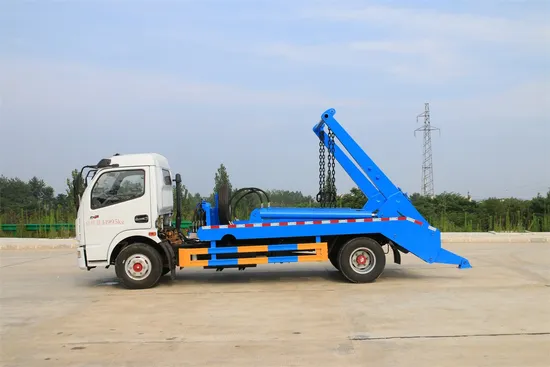
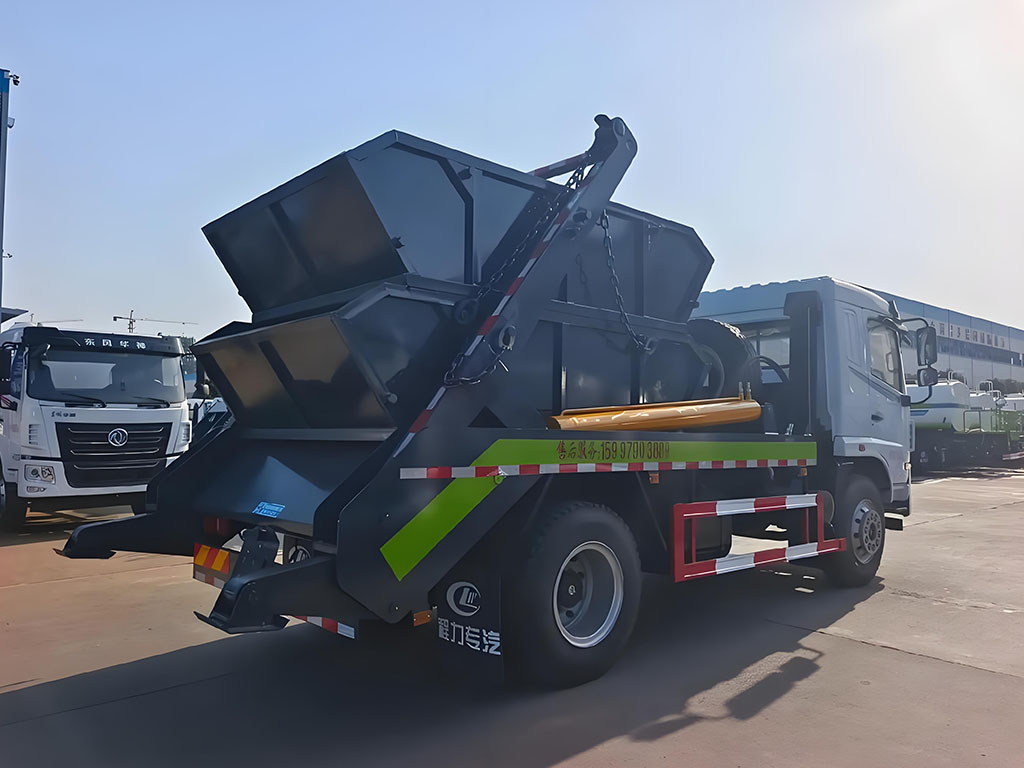
Unlike traditional rear-loaders that require a crew of two or three, a swing arm garbage truck is designed primarily for single-operator efficiency. Its defining feature is a hydraulic arm mounted on the side of the vehicle, between the cab and the rear wheels. This arm can swing out, grab a specially designed cart, lift it over the truck, and dump the contents into the hopper—all controlled from the driver’s seat. The primary mechanism involves a gripper head that securely clasps the bar or handle of a compatible container. This design is ideal for curbside residential collection and commercial routes using standardized bins.
Core Components and Operation Cycle
The system’s reliability hinges on several key components working in unison:
- The Hydraulic Swing Arm: The main lifting apparatus, providing reach and lifting power.
- Gripper Head: Attached to the arm’s end, it automatically engages and releases the cart.
- Standardized Carts: Typically 60, 95, or 300-gallon wheeled containers provided to residents or businesses.
- Hopper and Packing Mechanism: The dumped waste is compacted by a hydraulic panel to maximize load capacity.
The operational cycle is remarkably swift: the driver positions the truck, activates the arm via a joystick or panel, and the entire lift-dump-return sequence completes in under 30 seconds. This automation directly translates to fewer personnel on the route and reduced physical strain and injury risk.
Swing Arm Truck vs. Other Collection Systems: A Detailed Comparison
To understand where the side-loading swing arm truck excels, it’s helpful to compare it with other common waste collection vehicles. The choice often depends on route density, container type, and labor structure.
| Truck Type | Key Mechanism | Best For | Crew Size | Pros | Cons |
|---|---|---|---|---|---|
| Swing Arm (Side Loader) | Mechanical side arm lifts standardized carts. | Residential curbside, planned communities, commercial bins. | 1 (Driver-Operator) | Low labor cost, operator safety, speed with compatible carts. | Limited to compatible containers, less flexible for bulk items. |
| Rear Loader | Manual loading at the rear, hydraulic compaction. | High-density urban areas, commercial dumpsters, mixed waste. | 2-3 | High volume, handles diverse waste/bulky items. | High labor cost, higher injury risk, slower. |
| Front Loader | Large forks lift commercial dumpsters overhead. | Commercial and industrial accounts with large dumpsters. | 1 | Efficient for large commercial containers, high capacity. | Not for residential use, requires wide clearance. |
| Automated Side Loader (ASL) | Robotic arm, often with camera guidance. | Highly standardized residential routes. | 1 | Maximum automation, precise cart handling. | Highest upfront cost, requires perfect cart placement. |
As Michael Torrance, a fleet management consultant with over 20 years of experience and a certified instructor, notes: “The swing arm truck represents the sweet spot for many municipalities transitioning from manual collection. It offers substantial labor savings over rear loaders while being more adaptable and cost-effective than fully automated systems. The return on investment is often calculated in under three years based on reduced worker’s compensation claims and lower staffing needs.”
The Tangible Benefits for Urban Waste Management
Adopting a swing arm garbage truck system delivers measurable advantages across several key performance indicators for any waste collection operation.
Enhanced Operational Efficiency and Cost Savings
The single-operator model is the most significant financial driver. According to a Waste360 industry report, labor can constitute up to 70% of a collection route’s total cost. Reducing a crew from three to one directly slashes this expense. Furthermore, the speed of collection increases route density, allowing one truck and driver to service more households per day. Fuel efficiency also improves as the truck makes fewer stops and idles less compared to constant stop-start manual loading.
Improved Worker Safety and Reduced Injury
Waste collection is consistently ranked among the most dangerous jobs. The Bureau of Labor Statistics (BLS) data shows refuse collectors have a much higher rate of musculoskeletal injuries than the national average. The swing arm system eliminates the need for workers to lift heavy bins repeatedly or ride on the back of the truck, dramatically reducing strains, sprains, and impact injuries. This leads to lower insurance premiums and fewer lost workdays.
Community and Environmental Advantages
These trucks contribute to cleaner streets. Standardized, lidded carts are less prone to spillage and animal scattering than bags or loose bins. The automated lift also minimizes wear and tear on curbs and landscaping. From a sustainability angle, efficient routing and higher compaction rates mean fewer truck miles traveled per ton of waste collected, lowering the carbon footprint of the collection service itself.
Key Specifications and Purchasing Considerations
Not all swing arm garbage trucks are created equal. When evaluating models for your urban waste collection needs, focus on these critical specifications.
- Chassis and Engine: Consider GVWR (Gross Vehicle Weight Rating), engine horsepower, and transmission type. Diesel remains standard for durability, but CNG and electric chassis are growing options for sustainable fleets.
- Arm Reach and Lift Capacity: Arm reach (typically 6-8 feet) determines how far from the curb the cart can be collected. Lift capacity must exceed the weight of a fully loaded largest cart.
- Hopper and Body Capacity: Measured in cubic yards. Larger bodies (e.g., 31-40 cubic yards) allow for longer routes between trips to the landfill.
- Container Compatibility: Ensure the gripper head is compatible with your cart system’s bar design (e.g., square bar, round bar, pick-up style).
For organizations seeking a balance of robust performance and value, exploring options from a global manufacturer like Chinese Truck Factory can be worthwhile. They have developed a range of specialized chassis and bodies that meet international standards, often offering customizable solutions for specific municipal requirements at competitive price points, making fleet modernization more accessible.
Implementing a Successful Swing Arm System: Beyond the Truck
Purchasing the truck is only the first step. A successful rollout requires careful planning and community integration.
Cart Distribution and Public Education: A synchronized program to distribute standardized wheeled carts to all residents is essential. Clear communication about placement (curbside, bar facing the street) and acceptable materials is crucial for route efficiency. Educational campaigns reduce contamination and collection issues.
Route Optimization: Existing routes designed for rear-loaders may need complete re-engineering. Software that factors in cart location, traffic patterns, and disposal site distance can maximize the new system’s productivity. The goal is to create a dense, logical sequence of right-hand pickups.
Operator Training: While simpler than manual collection, effective operation requires training. Drivers must learn to use the controls smoothly, position the truck optimally for the arm’s reach, and perform basic pre-trip inspections on the hydraulic system.
Frequently Asked Questions (FAQ)
Q: Can a swing arm truck collect bags or loose trash?
A: Generally, no. Its design is specifically for standardized wheeled carts. Some operators use a “tag-along” cart for occasional bag pickup, but relying on this defeats the efficiency purpose. For areas with significant loose waste, a rear-loader remains more suitable.
Q: How durable is the hydraulic swing arm mechanism?
A: Modern swing arms are engineered for millions of cycles. Durability depends on maintenance. Regular inspection of hydraulic lines, joints, and the gripper head is vital. Following the manufacturer’s service schedule prevents most major failures.
Q: Are these trucks suitable for narrow streets or alleys?
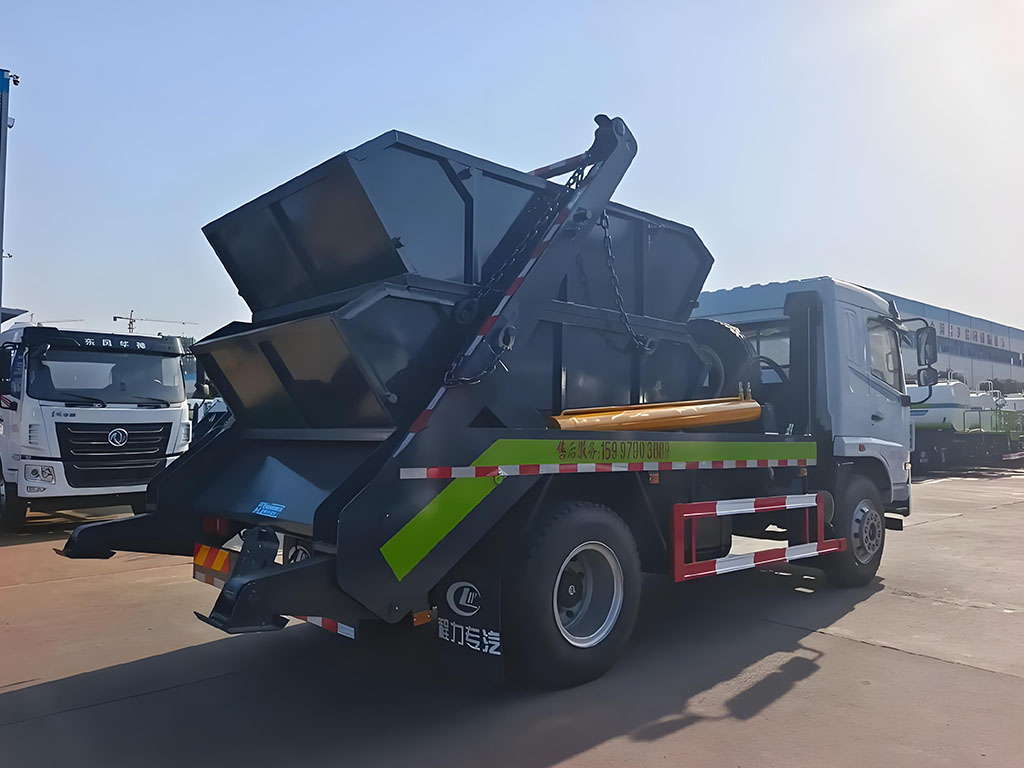
A: This is a key consideration. While more maneuverable than a front loader, the side arm requires clear space to extend. Many models are built on a standard truck chassis, which may be too wide for very tight alleys. Some manufacturers offer “alley” or “semi-alley” cab chassis with narrower widths specifically for this challenge.
Q: What is the typical lifespan of a swing arm garbage truck?
A: With proper maintenance, the truck body and arm system can last 10-15 years. The chassis may need replacement or major overhaul within 7-10 years, depending on mileage and duty cycle. Many operations plan for a body replacement on a new chassis during the vehicle’s life.
Q: How do I justify the upfront cost to my city council or management?
A: Build a business case focusing on Total Cost of Ownership (TCO). Highlight the dramatic reduction in annual labor costs, lower injury-related expenses (insurance, claims), and potential fuel savings. A clear ROI projection over 5-7 years, often showing payback from labor savings alone, is the most compelling argument.
Sources & Further Reading:
- U.S. Bureau of Labor Statistics. Occupational Outlook Handbook, Refuse and Recyclable Material Collectors. https://www.bls.gov/ooh/construction-and-extraction/refuse-and-recyclable-material-collectors.htm
- Waste360. Industry Reports and Analysis. https://www.waste360.com/
- Solid Waste Association of North America (SWANA). Collection Systems & Technical Resources. https://swana.org/