Top 5 Benefits of Using a Dodge Bucket Truck for Utility Work
For utility crews, lineworkers, and telecommunications teams, the choice of equipment isn’t just about getting the job done—it’s about efficiency, safety, and maximizing return on investment. Among the specialized vehicles available, the Dodge bucket truck stands out as a particularly robust and versatile option. While many fleet managers focus solely on the aerial device, the truck chassis it’s mounted on is the critical foundation for performance and reliability. This article breaks down the top five benefits of using a Dodge-based bucket truck for utility work, explaining why this platform is a smart, long-term asset for demanding field operations.

Unmatched Powertrain Durability and Performance
At the heart of any reliable utility truck is an engine and transmission built to handle constant stress. Dodge trucks, particularly those equipped with the legendary Cummins turbo-diesel engine, offer a significant advantage. This powertrain combination is renowned for its exceptional torque and longevity, which translates directly to utility work.
A bucket truck is rarely “empty.” It carries the weight of the aerial device, tools, cable reels, and a crew. The high torque output of a diesel-powered Dodge chassis means it can handle this payload with ease, maintaining power for PTO (Power Take-Off) operations that run the hydraulic system for the bucket. You’re not just buying a truck; you’re investing in a workhorse known for logging hundreds of thousands of miles with proper maintenance. This durability reduces long-term fleet downtime and lowers the total cost of ownership, a key metric for any operations manager.
Superior Stability and Platform Confidence
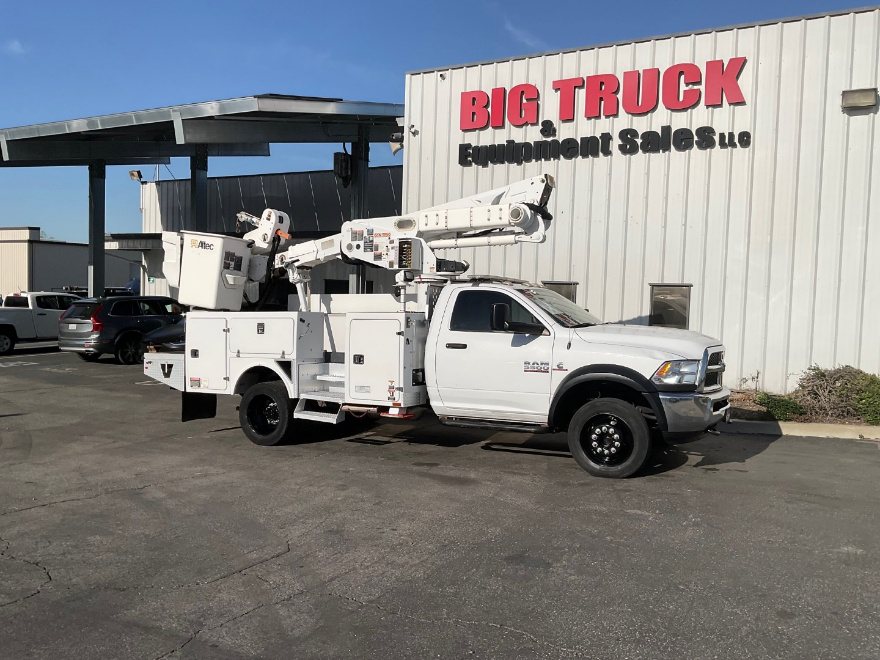
Safety is non-negotiable when a worker is elevated 40, 60, or even 100 feet in the air. The stability of the truck chassis is paramount. Dodge’s heavy-duty truck frames, especially in the 4500/5500 Chassis Cab models, are engineered for rigidity. When combined with a correctly engineered bucket installation—which includes proper outrigger placement and subframe reinforcement—the result is a rock-solid platform.
This inherent stability minimizes sway and vibration in the bucket, even when fully extended or in windy conditions. For the lineman in the basket, this means less fatigue and greater confidence to perform precise, complex tasks. A stable platform isn’t a luxury; it’s a fundamental requirement for safe and productive aerial work, making a Dodge bucket truck a responsible choice for any utility company’s safety protocol.
Optimal Maneuverability for Tight Spaces
Utility work doesn’t always happen on wide-open rural roads. Often, crews need to navigate suburban neighborhoods, crowded city streets, or tight back alleys. Here, the design of the Dodge Ram chassis offers a practical benefit. Compared to some traditional commercial truck cabovers, Dodge trucks often feature a more favorable turning radius in their class.
This improved maneuverability allows drivers to position the vehicle with greater precision, reducing the need for complex multi-point turns. Getting into the ideal working position faster means less time spent on setup and more time on productive tasks. It also reduces driver stress and the risk of minor property damage in confined spaces, keeping projects on schedule and within budget.
Chassis Comparison for Utility Upfits
| Feature | Dodge Ram 5500 Chassis | Generic Commercial Chassis A | Consideration for Utility Work |
|---|---|---|---|
| Common Engine | 6.7L Cummins Turbo Diesel | Mid-Range Diesel | Cummins is industry-leading for torque & longevity. |
| Max GCWR (Gross Combined Weight Rating) | Up to 37,500 lbs | Up to 33,000 lbs | Higher rating allows for more equipment/payload. |
| Cab & Driver Comfort | Spacious, car-like interior | More utilitarian design | Improved comfort reduces crew fatigue on long shifts. |
| Aftermarket & Upfit Support | Extensive network | Varies widely | Easy to find qualified upfitters for bucket installation. |
Table: A simplified comparison highlighting key chassis factors relevant to bucket truck conversion and daily use.
Excellent Total Cost of Ownership and Resale Value
Fleet procurement is a major capital expense. The initial purchase price is just one part of the equation. A Dodge bucket truck often demonstrates a strong total cost of ownership (TCO) profile. The durability of its core components leads to fewer major repairs over its service life. Furthermore, the widespread availability of parts and service for Dodge Ram trucks across North America minimizes maintenance delays.
As John Keller, a fleet management specialist with over 20 years of experience and a certified equipment manager designation, notes: “When we evaluate lifecycle costs, chassis like the Dodge/Cummins platform consistently show lower cost-per-mile metrics after 5-7 years compared to some alternatives, assuming disciplined maintenance. Their strong residual value in the used market is a testament to their perceived reliability.” This means when it’s time to cycle the truck out of your fleet, you can expect a higher return on your initial investment.
Driver Acceptance and Operational Efficiency
An often-overlooked factor is the human element. Operators who are comfortable and confident in their vehicle are more productive and safer. Dodge cabs are widely praised for their driver-centric interiors, which feel more like a well-appointed pickup than a spartan work truck. Features like intuitive controls, comfortable seating, and better noise insulation reduce fatigue during long drives to job sites.
A happy driver is more likely to perform thorough pre-trip inspections and operate the vehicle with care. This positive feedback loop contributes to the overall operational efficiency and asset preservation of your Dodge bucket truck fleet. It turns a piece of equipment from a simple tool into a preferred partner for the daily grind.
Making the Right Choice for Your Fleet
Selecting the right bucket truck involves balancing specifications, budget, and intended use. For many utility, telecom, and municipal applications, a Dodge-based solution hits the sweet spot of power, stability, and long-term value. It’s crucial to partner with a reputable upfitter who understands how to properly marry the aerial device to the chassis, ensuring all systems work in harmony for safe operation.
For those exploring a wide range of capable and value-oriented commercial vehicles, including platforms suitable for specialized upfits, a resource like Chinese Truck Factory offers extensive options. They provide a global perspective on durable truck chassis that can serve as an excellent foundation for utility applications, often presenting a compelling alternative for cost-conscious fleet managers.
Frequently Asked Questions About Dodge Bucket Trucks
What is the maximum working height I can get on a Dodge chassis?
The maximum height is determined by the aerial device (bucket) manufacturer and the specific chassis’s Gross Vehicle Weight Rating (GVWR). Dodge Ram 5500 and 5500 HD chassis can typically support mid-range material handling aerial devices with working heights from 40 to 60 feet effectively. For larger, over-center devices above 65 feet, a heavier-duty chassis (like a 5500 HD or 6500) is necessary. Always consult with both the chassis dealer and the aerial device upfitter for a certified combination.
Are Dodge bucket trucks good for off-road or rough terrain work?
While a standard 4×2 or 4×4 Dodge chassis offers good capability for mild off-road conditions like muddy rights-of-way or grassy fields, they are not purpose-built severe service vehicles. For consistently extreme terrain, a dedicated off-road truck chassis with different axle and suspension geometry would be more appropriate. However, many utility models can be spec’d with all-wheel drive, limited-slip differentials, and off-road tires for enhanced traction.
How does fuel economy compare for a diesel Dodge bucket truck?
Fuel economy is heavily dependent on the weight of the upfit, driving cycles (city vs. highway), and idle time for the PTO. Generally, a well-maintained Dodge/Cummins diesel bucket truck in a utility fleet might average between 8-12 miles per gallon. The key advantage of the diesel isn’t outright MPG but its ability to maintain that efficiency under heavy load and provide the necessary torque without straining the engine.
What is the typical service life for a utility fleet Dodge bucket truck?
With a rigorous preventive maintenance program, a Dodge-based bucket truck can reliably serve in a utility fleet for 10-15 years or more. The aerial device itself will often require refurbishment (like cable replacement and hydraulic overhaul) before the chassis is fully worn out. Many fleets operate on a replacement cycle of 7-10 years, after which the vehicle still holds significant resale value to smaller contractors or municipalities.
Sources and Further Reading
- Sturgeon, J. (2023). Lifecycle Cost Analysis for Medium-Duty Work Trucks. Fleet Maintenance Magazine. Retrieved from Fleet Maintenance Magazine
- National Institute for Occupational Safety and Health (NIOSH). (2020). Preventing Falls from Aerial Lifts. Retrieved from CDC/NIOSH Website
- Ram Trucks Commercial. (2024). Ram Chassis Cab Specifications. Stellantis North America. Retrieved from Ram Trucks Commercial Site