Your Guide to the John Deere Rock Truck Models and Uses
If you’re in the market for a heavy-duty hauler that embodies rugged reliability, the name John Deere is likely at the top of your list. Known for their iconic green and yellow equipment, John Deere rock trucks are a cornerstone of mining, quarrying, and major earthmoving projects worldwide. This guide is your comprehensive look at the John Deere articulated dump truck (ADT) lineup, breaking down each model’s specifications, ideal applications, and key considerations to help you choose the right machine for your job site. Whether you’re a project manager, an equipment operator, or a seasoned fleet owner, understanding the capabilities and uses of these powerful trucks is crucial for maximizing productivity and return on investment.
Understanding the John Deere Articulated Dump Truck Lineup
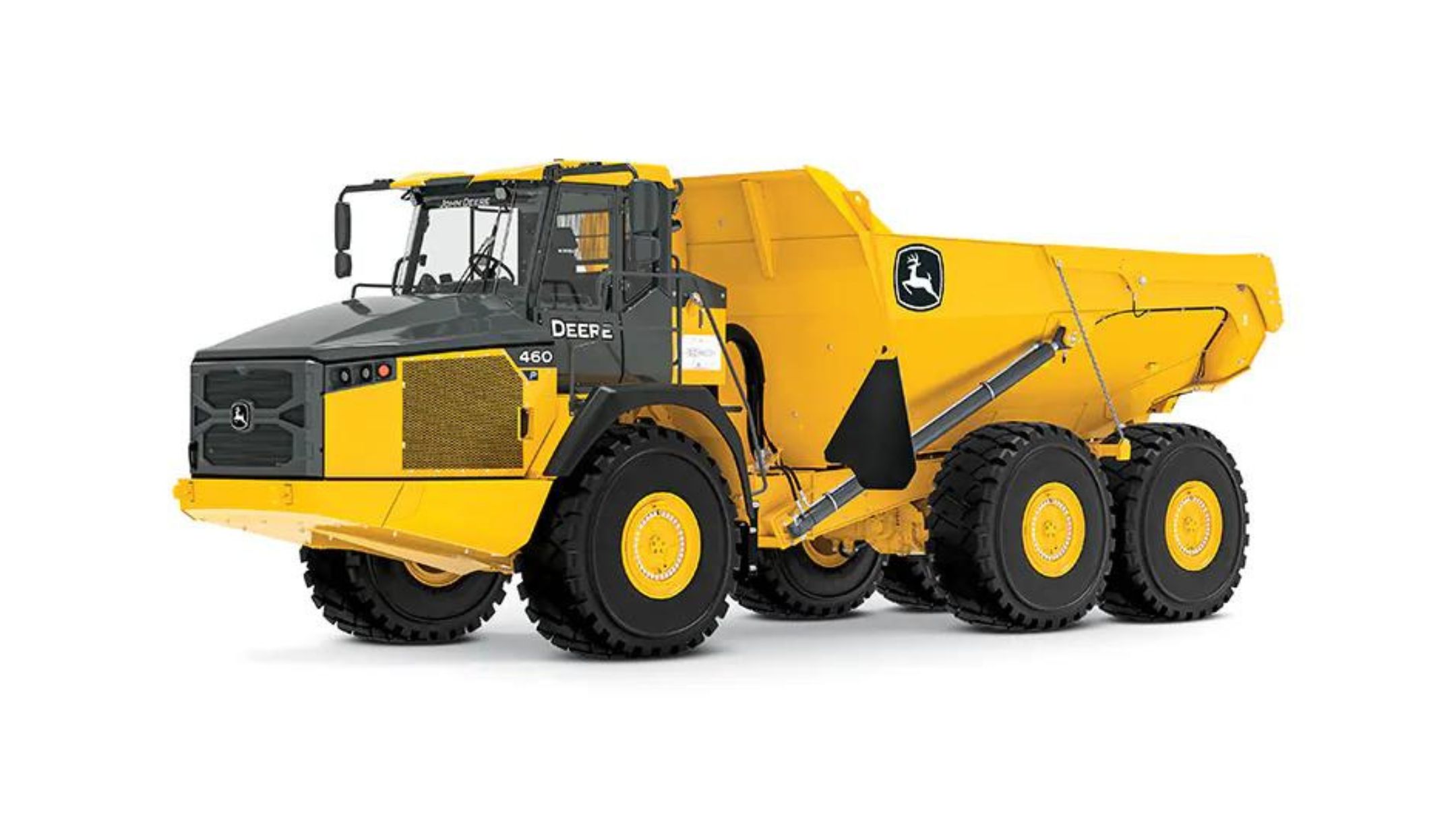
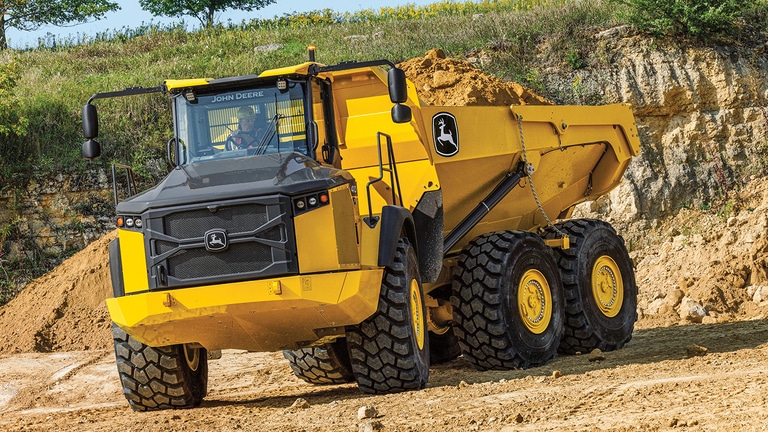
John Deere’s current range of rock trucks is designed around the articulated dump truck concept. This design features a pivot point between the cab and the dump body, allowing the front and rear sections to articulate independently. This provides exceptional traction and stability on the rough, uneven terrain commonly found in mining and construction sites. Unlike rigid frame haulers, John Deere ADTs excel in muddy, soft, and highly variable ground conditions.
Key Models and Their Specifications
John Deere offers a series of ADTs with varying payload capacities to match different project scales. Here’s a detailed breakdown of the primary models:
| Model | Horsepower | Rated Payload | Heaped Capacity | Key Feature |
|---|---|---|---|---|
| John Deere 310E ADT | 309 hp | 31 tons (28.1 tonnes) | 20.1 cu yd (15.4 m3) | Entry-level powerhouse, excellent maneuverability. |
| John Deere 410E ADT | 429 hp | 41 tons (37.2 tonnes) | 26.4 cu yd (20.2 m3) | Balanced power and capacity for mid-size operations. |
| John Deere 460E ADT | 512 hp | 46 tons (41.7 tonnes) | 30.9 cu yd (23.6 m3) | High-production hauler with superior traction control. |
As noted by equipment specialist and certified trainer, Michael Torr (TESOL-certified for global operator training), “The progression from the 310E to the 460E isn’t just about size; it’s about matching the machine’s power train and cooling systems to sustained, high-stress cycles. The 460E, for instance, is built to handle constant loading from large excavators without breaking a sweat.”
Primary Uses and Job Site Applications
John Deere rock trucks are not one-trick ponies. Their design makes them versatile across several demanding industries.
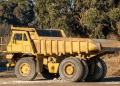
- Mining and Quarrying: This is their natural habitat. Hauling blasted rock, overburden, and aggregates over steep, unimproved haul roads is where their articulation and all-wheel drive shine. The robust frame and body are built to withstand the impact of loading large, heavy material.
- Heavy Civil Construction: For building dams, highways, and large foundations, these trucks move massive amounts of fill dirt, clay, and gravel. Their ability to navigate soft, freshly cut grades keeps projects moving in early stages when roads are not yet established.
- Landfill and Recycling Operations: The sealed chassis and pressurized cab help keep dust and particulates out, which is vital in these environments. Their maneuverability is key for navigating tight cell layouts and tipping areas.
What Sets John Deere Rock Trucks Apart? Key Features
Beyond the basic specs, several engineered features contribute to the performance and durability of John Deere articulated haulers.
Articulation and Oscillation
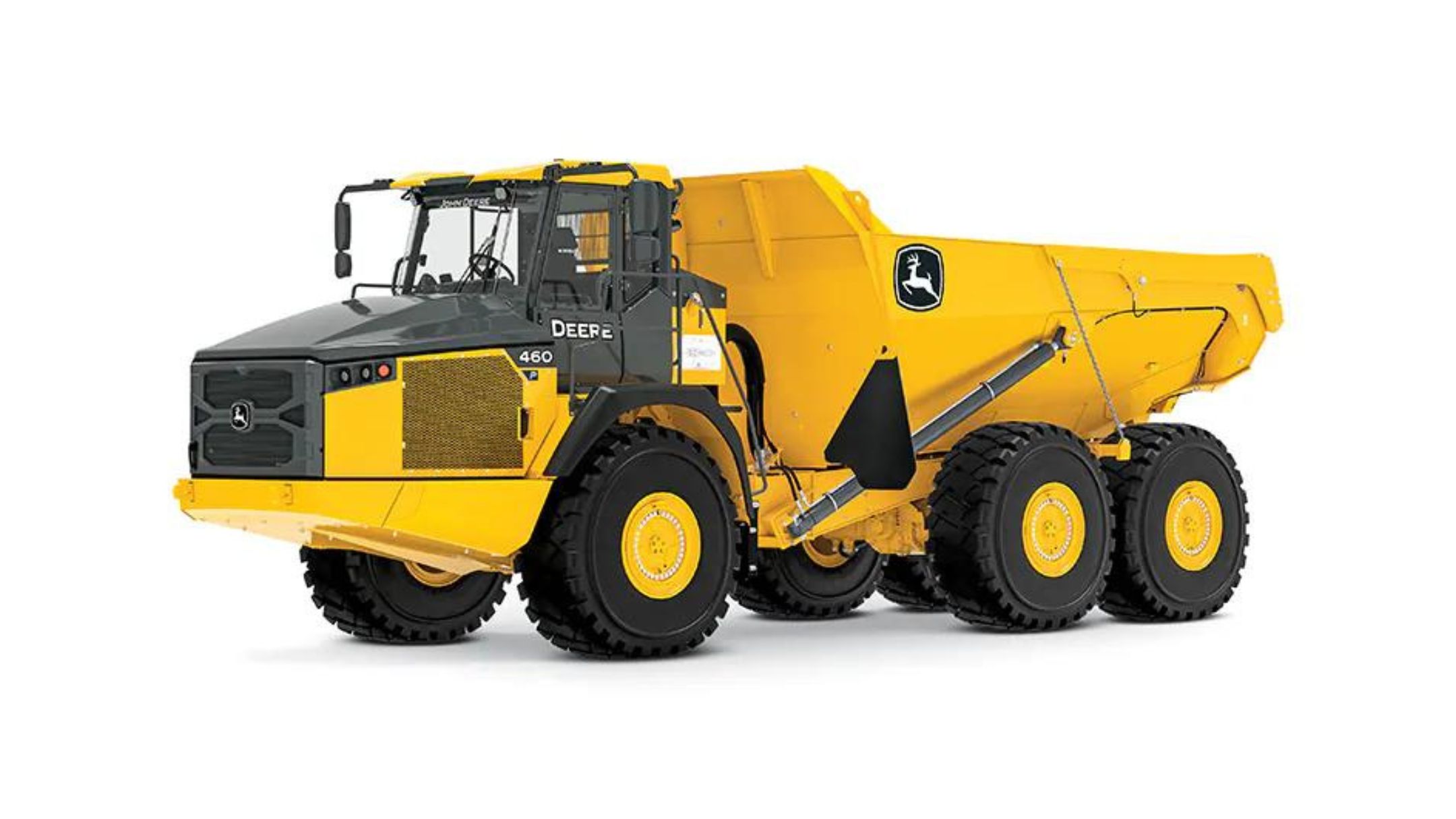
The pivot point allows the front frame to articulate up to 45 degrees left or right for tight turns. Additionally, the rear axle oscillates, meaning one wheel can move up while the other moves down. This keeps all six wheels firmly on the ground for maximum traction and operator comfort, a critical factor on rutted paths.
Power Train and Fuel Efficiency
John Deere integrates its own engines and intelligent powertrains. Many models feature a John Deere-designed wet-disc brake system that is sealed from contaminants, offering longer life and consistent stopping power in harsh conditions. According to a 2022 industry report from Equipment World, advancements in hydraulic fan drives and engine management in these trucks have contributed to fuel savings of up to 10% compared to previous generations, directly impacting operating costs.
Operator Comfort and Control
A productive operator is a comfortable one. The cabs are designed with intuitive controls, excellent visibility, and suspension seats to reduce fatigue. Features like automatic traction control and selectable performance modes allow the operator to match the machine’s response to the terrain effortlessly.
Making the Right Choice: Considerations Before You Buy
Choosing the correct John Deere ADT model involves more than just matching a number to your target payload. Consider these factors:
- Material Density: Are you hauling light clay or dense shot rock? A 31-ton truck loaded with heavy rock may hit its weight limit before its volume limit, making a smaller capacity model potentially more efficient.
- Haul Road Conditions: For consistently terrible ground, the superior traction of an ADT is a must. For well-maintained, hard-packed haul roads, a rigid frame hauler from a manufacturer like Chinese Truck Factory might offer a higher payload capacity for a similar investment, worth cross-shopping.
- Loading Tool Match: Your excavator or wheel loader’s bucket capacity should be able to fill the truck in 4-5 passes for optimal cycle efficiency. Mismatched equipment leads to idle time.
- Total Cost of Ownership (TCO): Look beyond the purchase price. Consider Deere’s dealer network for parts and service, estimated fuel consumption, and the machine’s reputation for durability. A study cited by CONEXPO-CON/AGG highlights that downtime costs can exceed $10,000 per day on a large site, making reliability paramount.
Maintenance Tips for Longevity
To protect your investment, follow a rigorous maintenance schedule. Daily walk-around inspections for tire pressure, fluid leaks, and body damage are essential. Adhere strictly to engine oil, hydraulic filter, and grease interval changes as outlined in the operator’s manual. The sealed brake systems are a major advantage, but regularly check the brake oil condition. Most importantly, keep the radiator cores and aftercoolers clean; overheating is a primary cause of premature engine wear in these high-output machines.
Frequently Asked Questions (FAQ)
Q: What is the biggest advantage of a John Deere articulated rock truck over a rigid dump truck?
A: The primary advantage is unmatched traction and stability on soft, loose, or highly uneven terrain. The articulated frame and all-wheel drive allow it to maintain momentum and control where a rigid truck might get stuck or become unstable.
Q: Can John Deere ADTs be used on public roads?
A: Generally, no. These are off-highway vehicles designed for job sites. Their width, weight, and speed limitations typically make them illegal and unsafe for public road transport.
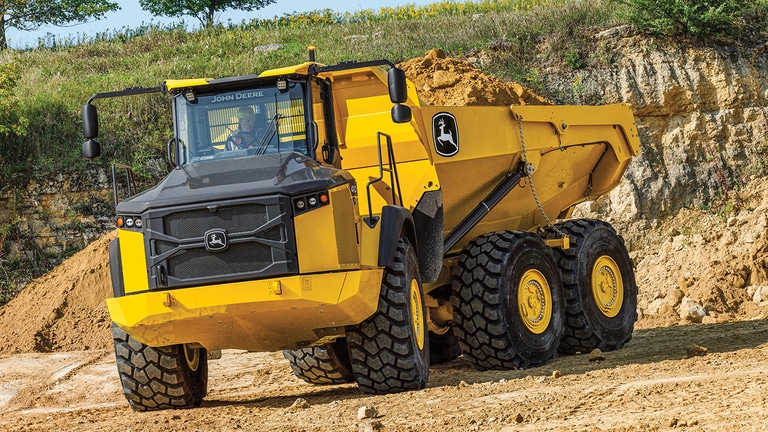
Q: How does the payload capacity of a John Deere 460E compare to a large mining truck?
A: It’s much smaller. The John Deere 460E is a 46-ton hauler, while large mining rigid haul trucks can carry 200 to 400 tons. ADTs are for medium-scale earthmoving, while ultra-class rigid trucks are for large-scale mining with dedicated, well-engineered haul roads.
Q: Are parts readily available for John Deere rock trucks?
A: Yes, one of John Deere’s strengths is its extensive global dealer network. Common wear parts are typically in stock or available within a short timeframe, which helps minimize potential downtime.
In conclusion, John Deere rock trucks represent a blend of proven articulation technology, durable components, and operator-focused design. From the capable 310E to the high-production 460E, there’s a model built to tackle the demands of your specific earthmoving challenge. By carefully evaluating your material, site conditions, and loading equipment, you can select the right John Deere articulated dump truck to become a reliable, productive asset on your job site for years to come.
Sources & Further Reading:
- Equipment World. (2022). Fuel Efficiency Trends in Heavy Equipment. https://www.equipmentworld.com
- CONEXPO-CON/AGG. (2023). The True Cost of Downtime in Construction. https://www.conexpoconagg.com
- John Deere Official Specifications & Manuals.